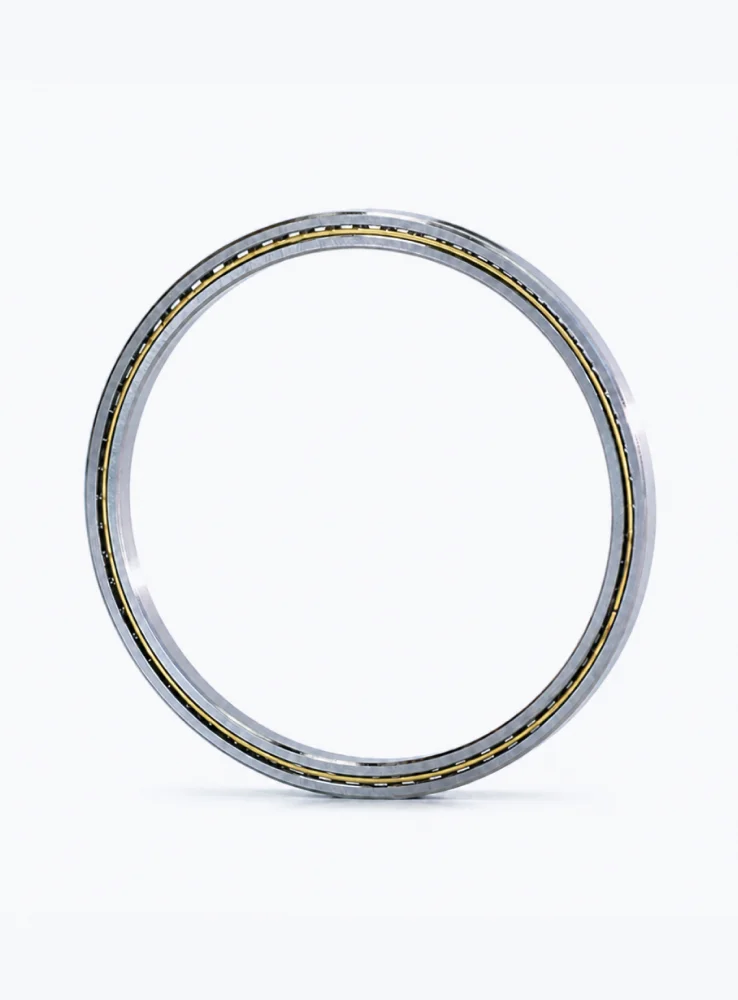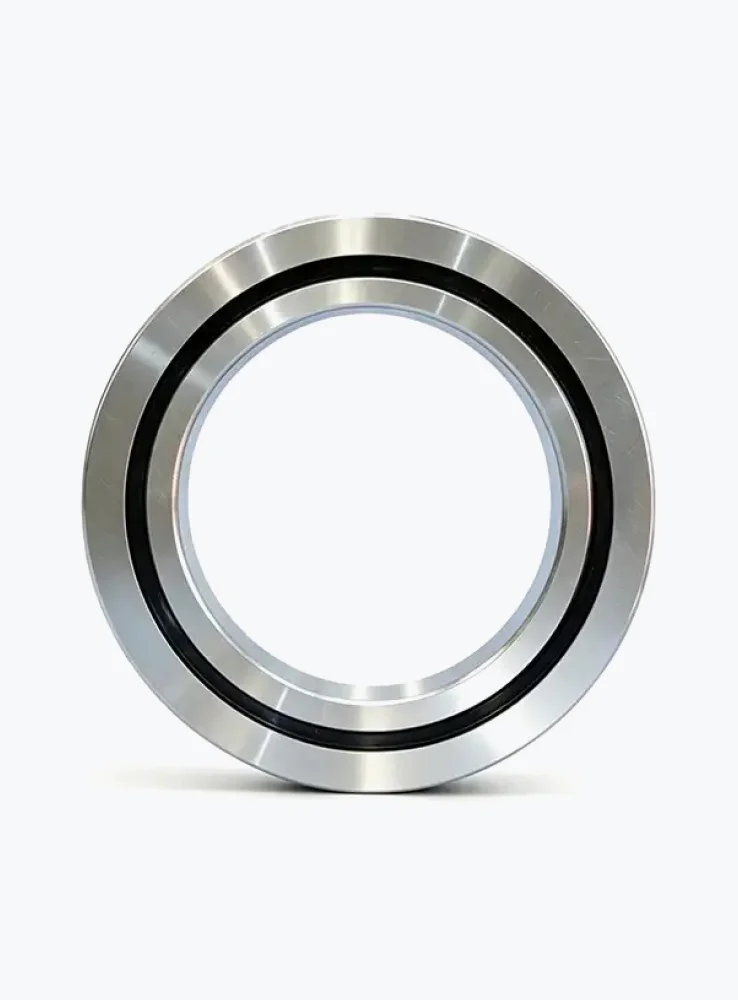
In semiconductor manufacturing, every nanometer counts. Thin-section bearings are critical components in wafer handling robots, lithography stages, and metrology equipment, where even micron-level runout can cause yield loss. Understanding why precision matters—and how to select bearings that deliver consistent accuracy—directly impacts equipment uptime and defect rates. This article examines the role of thin-section bearings in semiconductor tools, explains the key precision parameters, and provides guidance for engineers evaluating suppliers, including the capabilities offered by BIBO Bearing.

Why Precision Is Non-Negotiable in Thin-Section Bearings

Thin-section bearings, characterized by their small cross-sectional height relative to bore diameter, are designed for space-constrained applications. In semiconductor equipment, they must maintain near-perfect rotational accuracy under varying loads, speeds, and temperatures. The consequences of insufficient precision include:

  • Vibration and noise that compromise photolithography alignment
  • Inconsistent torque affecting wafer positioning repeatability
  • Premature wear leading to increased particle generation cleanroom contamination
  • Reduced service life causing unscheduled downtime in high-volume production

Precision is typically defined by ISO tolerance classes (P4, P2) or ABEC ratings, but semiconductor applications often demand tighter geometric tolerances for raceway roundness, surface finish, and radial/axial runout.

Key Precision Parameters for Semiconductor Thin-Section Bearings
Radial Runout and Axial Runout

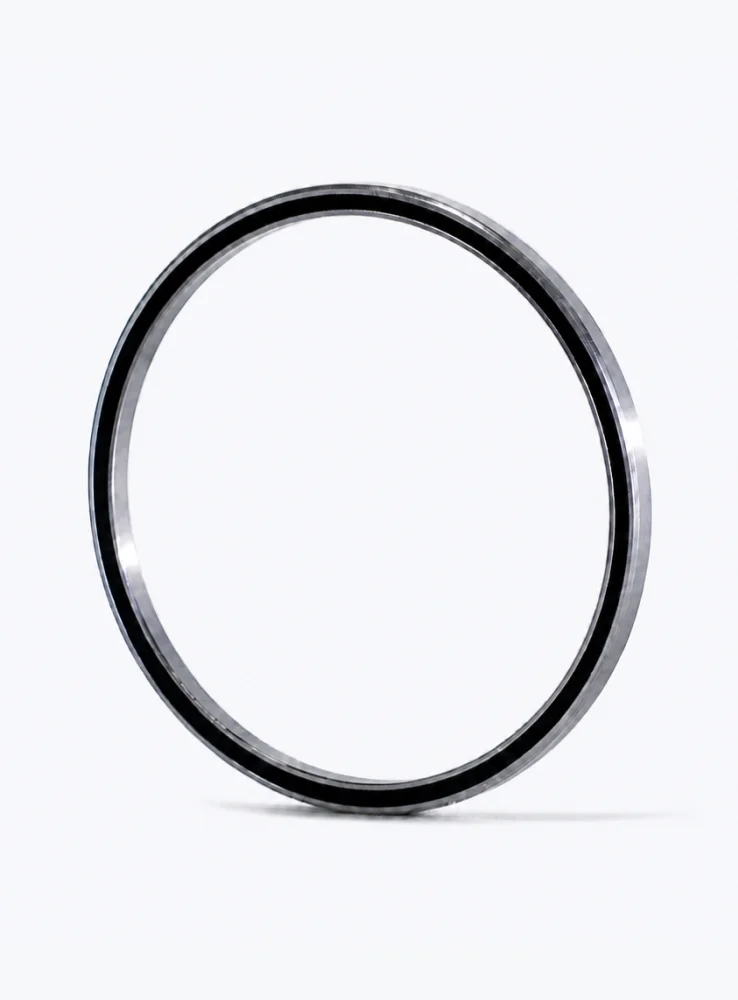
Radial runout describes the variation in the bearing’s outer ring rotation relative to the inner ring. Axial runout affects face perpendicularity. In a wafer transfer robot, a radial runout of 2 µm can translate into a positioning error of several micrometers at the end effector, potentially misaligning a 300 mm wafer. High-precision thin-section bearings from manufacturers like BIBO Bearing are ground to sub-micron runout values, often below 1 µm for critical stages.

Contact Angle and Preload Consistency

Angular contact thin-section bearings are often used in pairs to handle combined loads. The contact angle must be uniform across the raceway to maintain consistent stiffness. Variation leads to uneven load distribution and micro-sliding, which generates heat and particles. BIBO Bearing’s proprietary manufacturing process ensures contact angle deviation within ±0.5°, a key differentiator for equipment requiring repeatable preload.

Surface Roughness and Material Grade

Raceway and ball surface roughness directly influences starting torque and running noise. Typical Ra values for semiconductor-grade bearings are 0.02 µm or better. The bearing steel must be vacuum-degassed or double-melted (e.g., VIM-VAR) to minimize non-metallic inclusions that cause premature flaking. BIBO Bearing uses high-nitrogen martensitic steel for its thin-section series, offering enhanced hardness and fatigue resistance in cleanroom conditions.

For more information on thin-section bearings for semiconductor equipment: Why precision is crucial, please click to visit: https://www.bobibearing.com/a/bearing-knowledge/thin-section-bearing-semiconductor.html
Optical instruments—from telescopes and microscopes to laser trackers and coordinate measuring machines—demand mechanical components that introduce no measurable error. Even a few microns of play or angular deviation can degrade image quality or measurement repeatability. Thin-section bearings have emerged as a critical enabler of the sub-arcminute accuracies these systems require. By understanding how their unique geometry reduces friction, minimizes deflection, and maintains consistent preload, engineers can specify bearings that directly improve instrument performance. This article examines the mechanisms by which thin-section bearings enhance accuracy and explains why they are increasingly the preferred choice for precision optical applications.

The Distinctive Design of Thin-Section Bearings

Unlike standard bearings that maintain a roughly square cross-section relative to bore diameter, thin-section bearings have a radially compact profile—typically with a cross-section height that is a fraction of the bore diameter. This design yields two fundamental advantages for optical instruments: reduced moment of inertia and lower rotating mass. With less mass to accelerate and decelerate, the bearing responds more quickly to position commands and settles with fewer residual vibrations. Additionally, the compact cross-section allows the bearing to fit within tight radial envelopes, enabling design engineers to locate the bearing closer to the instrument’s center of rotation, thereby minimizing lever-arm-induced errors.

Material Selection and Raceway Geometry

Thin-section bearings from manufacturers like BIBO Bearing are typically manufactured from high-carbon chromium steel (e.g., AISI 52100) or stainless steel (440C) to achieve high hardness and dimensional stability. The raceways are ground and honed to tolerances in the single-digit micron range, and the balls are graded to Grade 5 or finer per ABEC/ISO standards. These precision grades ensure that radial runout and axial runout remain below 2–3 µm, a critical threshold for optical systems that must resolve features at the nanometer scale.

How Thin-Section Bearings Directly Improve Accuracy

Thin-Section Bearings

Accuracy in optical instruments is a function of both static alignment and dynamic stability. Thin-section bearings contribute on both fronts.

Reduction of Friction-Induced Hysteresis

Optical positioning stages often require motion in the sub-micrometer range. Standard bearings with higher friction can exhibit stick-slip behavior, where static friction must be overcome before motion begins, leading to position overshoot and hysteresis. Thin-section bearings, because they use fewer and smaller balls (or rollers) under lighter preload, exhibit significantly lower starting torque and running torque. This allows smoother initiation and cessation of motion, enabling the servo controller to achieve finer positioning resolution. The result is consistent, repeatable positioning accuracy to within 0.5 µm or better in many commercial optical stages.

For more detailed information on how thin-section bearings can improve the accuracy of optical instruments, please click to visit: https://www.bobibearing.com/a/bearing-knowledge/thin-section-bearings-accuracy.html

Thin-section bearings are critical components in applications where space is limited and weight reduction is paramount, such as robotics, medical devices, and aerospace equipment. However, their delicate cross-section makes them especially vulnerable to installation errors that can lead to premature failure, excessive noise, or even catastrophic breakdown. Understanding the most frequent mistakes and knowing how to prevent them is essential for maintaining performance and extending service life. In this guide, we draw on decades of engineering experience at BIBO Bearing to highlight five common pitfalls and provide clear, actionable solutions to ensure your thin-section bearings deliver their full potential.

1. Using Improper Mounting Tools and Methods

One of the most prevalent installation errors is applying force directly to the bearing in a misguided attempt to seat it quickly. Thin-section bearings are not designed to withstand concentrated impact or uneven pressure.

Mistake: Hammering Directly on the Bearing

Striking the outer ring with a hammer or using a punch against the raceway can cause brinelling (indentations) on the raceways, distort the thin rings, or crack the hardened steel. Even a small dent can generate vibration and noise during operation.

Mistake: Uneven Force Application

Pressing only on one side of the bearing cocking the ring inside the housing or on the shaft. This leads to misalignment, increased friction, and accelerated wear.

Best Practice: Use an arbor press or a dedicated bearing installation tool that applies force evenly to the ring being fitted. For press fits, always support the ring that takes the load — never transmit force through the rolling elements. BIBO Bearing recommends using calibrated mounting sleeves and checking alignment with a dial indicator during installation.

2. Neglecting Cleanliness and Environmental Control

thin-section bearings

Thin-section bearings have smaller internal clearances and are more sensitive to contamination than standard bearings. Even microscopic debris can cause high spots, noise, or jamming.

Mistake: Installing in Dirty or Humid Conditions

Dust, metal chips, or moisture from the workshop can enter the bearing during mounting. Once inside, particles act as grinding agents, quickly destroying the raceway finish.

Mistake: Handling Bearings with Bare Hands

Natural skin oils can corrode steel, and moisture can lead to early rust. For stainless steel or hybrid bearings, fingerprints might not cause rust but can attract dirt.

Best Practice: Always work in a clean, dry area. Wear lint-free gloves. Unpack thin-section bearings only immediately before installation. If the environment is dusty, use a temporary enclosure. BIBO Bearing supplies bearings in sealed packaging with desiccants — keep them sealed until the last moment.

For more detailed information on common mistakes when installing thin-section bearings and how to avoid them, please click here: https://www.bobibearing.com/a/bearing-knowledge/thin-bearing-mistakes.html

Gimbal systems used in drones, camera stabilization, robotics, and precision instrumentation face a relentless demand for weight reduction without compromising load capacity or rotational accuracy. Every gram saved translates directly to longer flight times, smoother motion, or smaller actuator requirements. The component often overlooked in this pursuit is the bearing. Conventional bearings, with their relatively thick cross-sections, impose unnecessary bulk. This is where thin-section bearings emerge as a transformative solution. Their reduced radial and axial dimensions allow designers to drastically cut weight while maintaining or even improving performance. For engineers seeking the optimal balance between compactness and reliability, understanding the engineering behind thin-section bearings—and why a specialist supplier like BIBO Bearing matters—is essential.

What Are Thin-Section Bearings?

Thin-section bearings are a class of rolling bearings characterized by a significantly reduced cross-section relative to their bore diameter. Unlike standard bearings that have a proportional relationship between bore size and cross-sectional thickness, thin-section bearings maintain a thin, uniform cross-section across a wide range of bore diameters—from as small as 25 mm up to several meters. This is achieved through optimized raceway geometry, specialized steel or ceramic materials, and precision manufacturing processes.

Key Geometric Feature

The defining parameter is the cross-section ratio: the thickness of the bearing ring (radial and axial) is typically only 10% to 20% of the bearing bore diameter. For example, a 100 mm bore thin-section bearing might have a radial thickness of just 10–12 mm, whereas a standard deep-groove ball bearing of the same bore would be about 24 mm thick. This difference is what unlocks substantial weight savings—often 50% or more compared to conventional bearings of equivalent load rating.

Why Thin-Section Bearings Are the Secret to Lightweight Gimbals

Thin-Section Bearings

Gimbal systems require bearings that can handle combined axial and radial loads, maintain low starting and running torque, and fit within tight spatial envelopes—all while contributing minimal inertia to the moving assembly. Thin-section bearings satisfy every one of these demands exceptionally well.

Weight Reduction Without Sacrificing Capacity

A typical gimbal bearing operates under relatively low loads but must support the weight of the payload (camera, sensor, etc.) and resist occasional shock loads. Thin-section bearings are engineered with optimized raceway curvatures and ball complements that achieve load ratings comparable to much larger standard bearings. By eliminating excess ring material, the bearing weight is reduced dramatically—a critical advantage for battery-powered flying or handheld stabilization.

Space Savings and Compact Design

The slender cross-section of thin-section bearings allows gimbal designers to reduce the outer diameter of the bearing housing and the inner diameter of the shaft, shrinking the overall envelope. This enables tighter packaging of motors, encoders, and control electronics, which further reduces system weight and rotational inertia. In multi-axis gimbals, the accumulated savings across all axles can represent 15–30% of the total gimbal weight.

For more detailed information about thin-section bearings: the secrets of lightweight gimbal systems, please click to visit: https://www.bobibearing.com/a/bearing-knowledge/thin-section-bearings.html

When space and weight constraints drive design, thin-section bearings become the engineer’s first choice for compact rotary systems. However, their reduced cross-section directly impacts load capacity in ways that differ significantly from standard bearings. Misjudging these limits leads to premature failure, excessive deflection, or costly redesigns. This article covers the essential knowledge every engineer needs—from load type definitions to material and geometry effects—so you can confidently select the right thin-section bearing for your application. As a specialist in precision thin-section bearings, BIBO Bearing provides engineering support and custom solutions to match your specific load demands.

Understanding Load Capacity in Thin-Section Bearings

Load capacity in a thin-section bearing refers to the maximum load it can sustain under defined operating conditions without permanent deformation or fatigue failure. Unlike standard bearings, where larger cross-sections provide generous safety margins, thin-section bearings maintain a small radial and axial cross-section (typically 1/8” to 1” square) while offering bore diameters from 1” to over 40”. This geometry creates unique load‑handling characteristics that engineers must analyze carefully.

The two primary categories are static load capacity (the maximum load the bearing can endure while stationary) and dynamic load capacity (the load under which the bearing achieves a rated fatigue life). Both are further divided into radial and axial directions. Because thin-section bearings have fewer rolling elements and smaller raceway contact areas, their load ratings are often lower than those of equivalent‑bore standard bearings. The key is to match the load profile of your application—whether constant, oscillating, or shock loads—to the bearing’s published ratings.

Radial vs. Axial Load: The Thin-Section Difference

In a deep‑groove thin-section bearing, radial load capacity is typically higher than axial load capacity for a given bore size. However, because the raceway depth is shallow, axial loads can cause edge loading if not properly aligned. Engineers should also consider combined loads—when both radial and axial forces act simultaneously. The bearing’s contact angle and internal clearance become critical. For pure axial loads, four‑point contact thin-section bearings are often preferred because they can handle bidirectional thrust with a single bearing row.

Key Factors That Influence Load Capacity

Several interrelated factors determine how much load a thin-section bearing can reliably handle. Understanding each helps engineers avoid undersizing or oversizing—two mistakes that inflate cost or risk reliability.

For more detailed information on the load-carrying capacity of thin-section bearings that engineers should know, please click to visit: https://www.bobibearing.com/a/bearing-knowledge/bearing-load-capacity.html

Selecting the correct thin-section bearing is a critical step in optimizing modern mechanical designs where space, weight, and performance constraints collide. Unlike standard bearings, thin-section bearings offer a unique balance of low cross‑section height and high load capacity, making them indispensable for robotics, aerospace, medical devices, and precision instrumentation. This guide provides a systematic framework to help engineers and designers evaluate key parameters, compare options, and confidently specify the right bearing for their application—with a focus on the reliable solutions offered by BIBO Bearing.

What Are Thin-Section Bearings?

Thin-section bearings are a specialized class of rolling element bearings characterized by an unusually thin cross‑section relative to the bore diameter. Typical dimensions have a cross‑section height that is only a fraction of the bearing’s outer diameter, enabling significant space and weight savings. They come in three main types: deep groove, angular contact, and four‑point contact configurations. Each type serves different load and moment requirements.

Key Structural Characteristics

  • Compact radial cross‑section – minimizes envelope size, allowing designers to reduce housing dimensions.
  • Low mass and inertia – essential for high‑speed or servo‑controlled systems.
  • High stiffness-to-weight ratio – maintains rigidity without adding unnecessary bulk.

Key Selection Criteria for Thin-Section Bearings

Choosing the right thin-section bearing requires evaluating several interdependent parameters. The following sub‑sections break down the most important factors.

1. Load Type and Capacity

Determine whether your application imposes radial, axial, or combined loads. For predominantly radial loads, deep groove or four‑point contact types are generally suitable. If moments or overturning forces are present, angular contact or paired bearings may be necessary. Always verify the dynamic and static load ratings (C and C0) against your load spectrum.

2. Speed and Lubrication

Thin-section bearings often operate at moderate to high speeds. The limiting speed depends on bearing type, cage material, and lubrication method. For grease‑lubricated designs, consider relubrication intervals; for oil‑lubricated systems, ensure adequate flow and cooling. BIBO Bearing offers optimized cage designs for reduced friction.

For more detailed information on the ultimate guide to selecting thin-section bearings for your design, please click here: https://www.bobibearing.com/a/bearing-knowledge/thin-section-bearing-guide.html

Are you thinking about investing in a steel structure workshop? If so, understanding what actually drives the price up or down is the key to controlling your budget, avoiding disappointments, and securing long-term value.

The price tag on a steel structure workshop is shaped by more than just steel weight. It’s influenced by raw material markets, project-specific designs, manufacturing standards, corrosion treatment choices, logistics, and much more. Once we know these details, we can make the process predictable—and often save money in ways that don’t show up on a simple quote.

When I first started, cost surprises were frustrating. The lowest bid was tempting, but hidden fees and poor-quality work would catch up later. Now, after two decades in this field, I know to look at price from every angle and ask smarter questions. Let me walk you through exactly what I check, and what you can insist on, to get real value for your project.

For more information on key factors affecting the cost of steel structure workshops, please click to visit:https://www.meichensteel.com/a/industry-insights/key-factors-influencing-steel-workshop-costs.html

Choosing between a steel structure warehouse and a concrete factory building can keep even the most experienced project manager up at night. We all want to avoid costly mistakes and ensure value for our company. In my two decades working with steel projects and visiting countless job sites, I’ve seen how this one decision—steel or concrete—can shape both your project costs and your future flexibility.

If your main goal is to save money—both at the start and as your facility grows—steel structure warehouses typically win. They cost less to construct, are much faster to complete, and save you money over the lifetime of your project through lighter maintenance and easy modification. Concrete buildings have their place, but their hidden costs and delays often catch buyers by surprise.

Let me walk you through the real cost differences, the nuances beyond just a price quote, and the insider tips I share with my clients who want both peace of mind and a strong bottom line.

When we first start comparing costs, the initial build gets a lot of attention. But it’s not just about the numbers on your supplier’s quote sheet; it’s about how those numbers play out in real-world conditions.

For more information on whether steel structure warehouses or concrete factory buildings are more cost-effective, please click to visit:https://www.meichensteel.com/a/industry-insights/steel-vs-concrete-cost-comparison.html

Fire-resistant steel structures are critical for protecting lives and assets in commercial, industrial, and residential buildings. Understanding the safety standards that govern these structures helps architects, engineers, and project owners make informed decisions. This article explains the core requirements, testing methods, and design principles behind fire-resistant steel, with practical insights from MeiChen Steel, a trusted provider of compliant steel solutions.

Why Fire Resistance Matters for Steel Structures

Steel is inherently non-combustible, but its mechanical properties degrade rapidly at temperatures above 540°C (1000°F). Without proper protection, a steel frame can lose strength and fail within minutes of a fire. Fire-resistant steel structures are designed to maintain load-bearing capacity for a specified duration, enabling safe evacuation and firefighting. International building codes require structural steel to meet specific fire-resistance ratings based on occupancy type, building height, and fire load.

Key Safety Standards for Fire-Resistant Steel

International and Regional Standards

Several major standards define fire resistance requirements for steel structures:

  • ASTM E119 (USA): Tests assemblies for fire exposure and hose stream impact, rating by time duration (e.g., 1-hour, 2-hour).
  • BS 476 (UK): Parts 20-22 specify fire resistance tests for loadbearing steel elements.
  • EN 1363 / EN 1993-1-2 (EU): Eurocode 3 part 1-2 provides design rules for fire-exposed steelwork.
  • AS 4100 / AS 1530 (Australia): Steel structures code with fire design appendices.
  • GB 50017 / GB 14907 (China): National standards for steel structure design and fire protection coatings.

Compliance with these standards is verified through third-party testing. MeiChen Steel ensures all its structural sections and prefabricated assemblies undergo rigorous assessment to meet applicable codes.

For more detailed information on safety standards for fire-resistant steel structures, please click to visit:https://www.meichensteel.com/a/procurement-guides/fire-steel-standards.html

When industrial operations require more than off-the-shelf solutions, custom industrial steel buildings deliver the adaptability that standard prefabricated structures cannot match. The ability to modify clear span widths, ceiling heights, roof profiles, and interior configurations enables businesses to optimize their space for specific processes, equipment, and workflows. MeiChen Steel specializes in providing this design flexibility—backed by engineering expertise—so you get a facility that works for your unique operational demands rather than forcing your operations to fit a generic building.

Understanding the Core of Design Flexibility in Steel Buildings

Design flexibility in steel buildings goes beyond choosing a color or adding a few windows. It encompasses the structural capacity to adjust bay spacing, accommodate overhead cranes, integrate mezzanines, and support heavy machinery loads without compromising the integrity of the building. Custom engineering allows you to specify the steel gauge, column placement, and bracing systems to meet local building codes and environmental conditions such as snow loads or high wind zones. MeiChen Steel’s fabrication process enables precise modifications that would be cost-prohibitive or impossible with standard kits.

Clear Span and Column Configuration

Clear span construction eliminates interior columns, providing uninterrupted floor space for assembly lines, storage racks, or vehicle movement. For facilities that require multiple bays or divided functional zones, custom column placement can be designed to support specific equipment layouts while still maximizing usable area. MeiChen Steel’s engineers work with you to determine the optimal balance between clear span depth and interior support points based on your space requirements.

Roof Profiles and Height Options

From low-slope roofs for efficient rainwater management to high-pitch profiles for ventilation and solar panel integration, the roof design directly impacts operating costs and interior comfort. Custom industrial buildings allow you to set eave heights from 12 feet to over 40 feet, accommodating forklifts, cranes, or storage systems. MeiChen Steel offers multiple roof framing options including rigid frame, tapered beam, and truss systems to match your functional needs and budget.

How Custom Steel Buildings Adapt to Different Industrial Applications

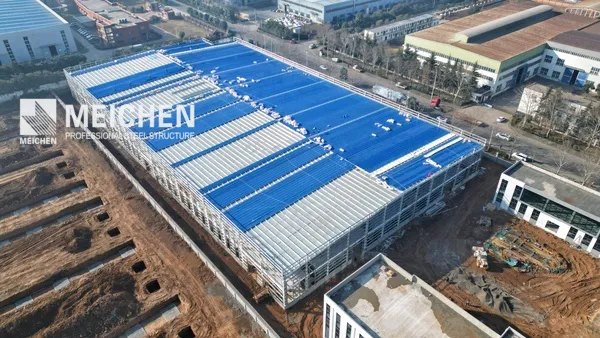
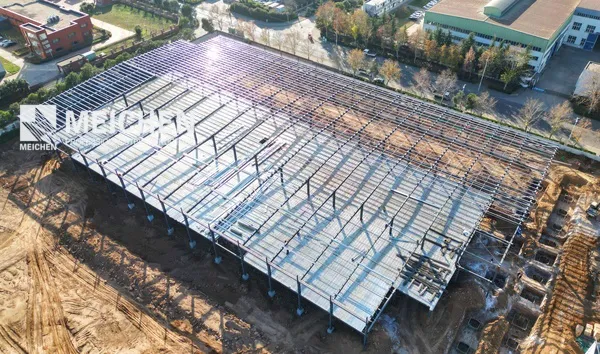
industrial steel buildings

No two industrial operations are identical. A food processing facility has different sanitation and temperature control requirements than a metal fabrication shop. Custom steel buildings can incorporate specialized features such as insulated panels for climate control, floor drains, wash-down ceilings, and explosion-proof electrical systems. MeiChen Steel has delivered structures for:

  • Distribution centers requiring high-density storage with clear heights for automated retrieval systems
  • Manufacturing plants needing heavy-duty overhead crane systems (up to 50-ton capacity)
  • Cold storage and refrigerated warehouses with multi-layer insulation and vapor barriers
  • Vehicle maintenance bays with drive-through doors, oil pits, and ventilation systems
  • Multi-storey office and showroom integrations within the same steel shell

For more information on the design flexibility you need for customized industrial steel structure buildings, please click to visit:https://www.meichensteel.com/a/procurement-guides/custom-steel-buildings.html