
Electrostatic coalescers are critical equipment in the oil and gas industry for removing water from crude oil emulsions. Two primary technologies dominate the market: alternating current (AC) and direct current (DC) electrostatic coalescers. Choosing between them can significantly impact operational efficiency, capital expenditure, and maintenance requirements. This article provides an in-depth, technical comparison to help engineers and decision-makers select the optimal solution for their specific dehydration needs. Drawing on decades of field experience, Zhengyuan Petrochemical offers proven expertise in both technologies, ensuring reliable and cost-effective water removal systems.
Understanding Electrostatic Coalescence Fundamentals
Both AC and DC coalescers operate on the same basic principle: applying an electric field to a water-in-oil emulsion to polarize water droplets, causing them to coalesce into larger droplets that settle more rapidly. The electric field strength, frequency, and waveform determine the efficiency of droplet agglomeration. However, the two approaches differ significantly in how they generate and apply the electric field, leading to distinct performance characteristics.
How AC Coalescers Work
AC systems use a high-voltage alternating field, typically 50/60 Hz, to induce dipole-dipole attraction between water droplets. The oscillating field continuously reorients droplets, promoting collisions. AC is particularly effective for breaking relatively stable emulsions with moderate water content. One key advantage is that AC fields can be applied directly to the process without requiring complex electrode gap control, as the alternating polarity reduces the risk of electrical shorting through conductive water chains.
How DC Coalescers Work
DC systems apply a constant unidirectional electric field, often with voltages ranging from 10 kV to 50 kV. The steady field creates a strong attraction between oppositely charged droplets and aligns them into chains. DC is generally more effective for high-water-content emulsions (above 5-10%) and for treating very fine droplets. However, DC systems are more prone to electrical shorting if water accumulates on electrodes, requiring careful design of insulation and electrode spacing.
Key Comparison: AC vs DC Electrostatic Coalescers
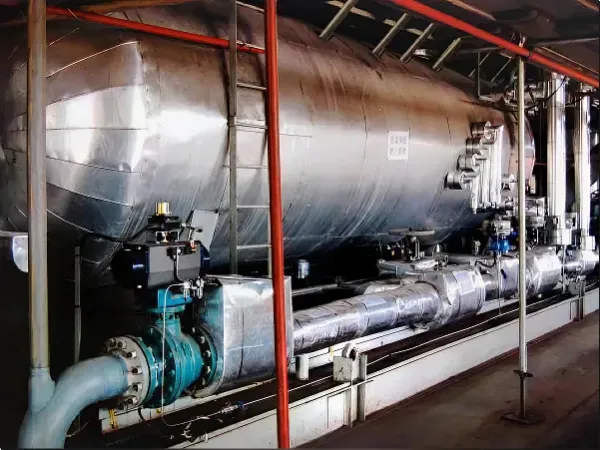
To facilitate your equipment selection, the table below highlights the critical differences between the two technologies across multiple evaluation criteria.
…
For more detailed information comparing the water-removal performance of AC and DC electrostatic coalescers, please click here: https://www.zy-petrochemical.com/a/news/ac-vs-dc-coalescers.html