
Accurate ashing tests are the backbone of quality control in food laboratories, determining mineral content and verifying product consistency. Selecting the right muffle furnace directly impacts the precision, repeatability, and efficiency of these analyses. With numerous options on the market, laboratories need a furnace that delivers uniform heating, reliable temperature control, and long-term durability. In this guide, we evaluate the critical criteria for choosing the best muffle furnace for ashing tests and explain why Heatest Instrument has become a trusted name in food lab environments.

Key Selection Criteria for Food Lab Muffle Furnaces

When choosing a muffle furnace for ashing tests, laboratory managers must consider several performance parameters that directly affect test results. The most important factors include temperature range, uniformity, ramp rate, and sample capacity.

Temperature Range and Control Precision

Standard ashing procedures for food samples typically require temperatures between 500°C and 900°C, though some matrices may need up to 1000°C. A high-quality muffle furnace should maintain ±1°C accuracy across the working zone to ensure consistent ashing. Heatest Instrument‘s furnaces feature PID controllers with real-time feedback, guaranteeing minimal temperature fluctuation even during long cycles.

Heating Uniformity and Chamber Design

Uneven heating leads to incomplete ashing and skewed results. The best furnaces employ multi-sided heating elements (typically on top, bottom, and sides) with advanced insulation to achieve uniformity of ±5°C across the entire chamber. Heatest Instrument uses high-grade ceramic fiber insulation that reduces heat loss and ensures temperature stability, critical for reproducibility in compliance with AOAC and ISO methods.
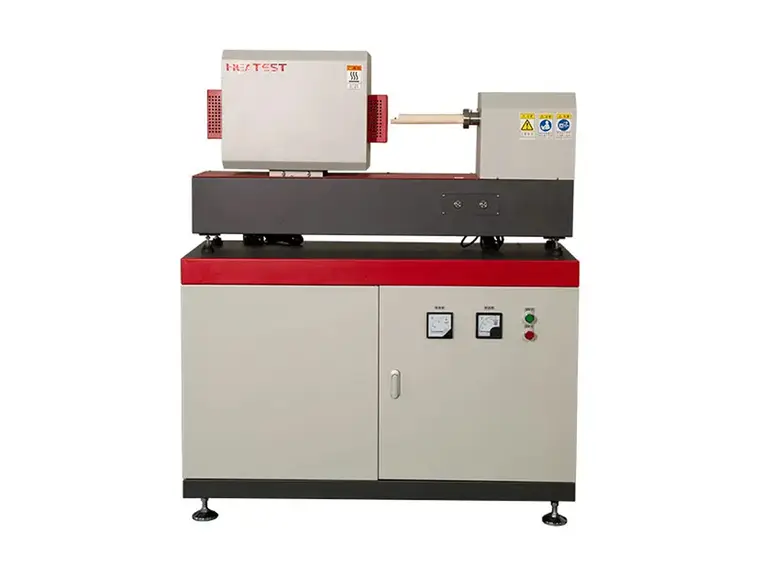
Slag-melting-temperature-tester

Advantage Comparison: Heatest Instrument vs. Generic Furnaces

To illustrate the difference that quality engineering makes, we compare Heatest Instrument’s muffle furnaces with typical budget options often found in less demanding labs.

  • Heating Element Durability: Heatest uses Kanthal A-1 wire elements embedded in ceramic plates, rated for 10,000+ hours at 1100°C. Generic furnaces often use cheaper Fe-Cr-Al wires that degrade after 2,000–3,000 hours, leading to frequent replacements.
  • Ramp/Soak Programmability: Heatest models include 8- or 16-segment programmable controllers, allowing stepwise ashing procedures (e.g., slow ramp to 250°C for volatile removal, then fast ramp to 550°C). Most basic furnaces only offer manual analog control.

For more detailed information on the best muffle furnaces for food laboratory ash testing, please click here: https://www.lyheatest.com/tester-knowledge/muffle-furnace-guide

Muffle furnaces are indispensable tools in materials testing, ashing, and heat treatment laboratories. However, their extreme operating temperatures—often exceeding 1000°C—pose serious risks of burns, fire, electrical shock, and even explosion if not handled correctly. Understanding and strictly following safety protocols is not just a recommendation; it is a fundamental responsibility for every lab technician. This article provides a comprehensive guide to muffle furnace safety, covering pre-operation checks, safe operating procedures, and post-use maintenance. Whether you work with a standard box furnace or a high-temperature model from Heatest Instrument, these tips will help you maintain a safe and efficient lab environment.

Understanding the Risks: Why Safety Matters

Before diving into procedures, it is critical to acknowledge the hazards involved. A muffle furnace operates at temperatures that can ignite combustibles, cause severe thermal injuries, and damage sensitive electronic components nearby. Common risks include:

  • Extreme heat: Direct contact with the furnace interior or heating elements can cause third-degree burns within seconds.
  • Electrical hazards: Faulty wiring, overloaded circuits, or moisture ingress can lead to short circuits or electrocution.
  • Thermal shock: Rapid temperature changes can crack refractory bricks or cause sample spattering.
  • Chemical exposure: Some materials release toxic fumes when heated; inadequate ventilation may pose respiratory risks.
  • Fire: Accumulated dust, flammable solvents, or improper sample containers can ignite inside or outside the furnace.

By recognizing these dangers, technicians can adopt a proactive mindset. Heatest Instrument designs its muffle furnaces with multiple safety features, but operator vigilance remains the first line of defense.

Essential Pre-Operation Safety Checks

Every time before using a muffle furnace, a systematic inspection should be performed. This routine minimizes preventable accidents and extends equipment life.

Inspect the Furnace and Wiring

Visually examine the furnace exterior, door seal, and power cord. Look for cracks in the refractory lining, frayed wires, or signs of overheating at the plug. Ensure the furnace is placed on a stable, non-flammable surface with adequate clearance (at least 30 cm) from walls and other equipment. For electrical safety, verify that the outlet matches the furnace rating (voltage and amperage) and that a ground fault circuit interrupter (GFCI) is present if recommended.

For more detailed information on muffle furnace safety tips that laboratory technicians should know, please click here: https://www.lyheatest.com/electric-furnace-knowledge/muffle-furnace-safety/

Muffle furnaces are essential tools in laboratories, material testing facilities, and industrial heat treatment processes. When these furnaces malfunction, even a minor issue can disrupt workflows, compromise sample integrity, or cause costly downtime. Understanding the most frequent problems and their root causes is the first step toward effective repair and maintenance. This guide outlines the common malfunctions encountered with muffle furnaces, provides clear diagnostic steps, and offers practical fixes that can be performed by trained personnel. Heatest Instrument has compiled this reference based on decades of field experience, helping users restore furnace performance quickly and safely.

Temperature Inconsistency and Drift

One of the most reported issues in muffle furnace operation is the inability to maintain a set temperature or erratic temperature readings. This problem often stems from three primary sources: faulty thermocouples, degraded insulation, or controller calibration drift.

Thermocouple Degradation

The thermocouple is the furnace’s primary temperature sensor. Over time, exposure to extreme heat and corrosive atmospheres can cause the thermocouple wires to oxidize, embrittle, or develop short circuits. A failing thermocouple typically shows temperature readings that fluctuate widely or read significantly lower than the actual temperature. Solution: Inspect the thermocouple for visible damage—discoloration, cracks, or loose connections. Replace it with a certified type-K or type-R thermocouple recommended by Heatest Instrument. After replacement, perform a two-point calibration (e.g., at 300°C and 1000°C) using a calibrated reference probe.

Insulation Deterioration

Muffle furnaces rely on high-quality ceramic fiber or refractory brick insulation to retain heat. Over many cycles, moisture absorption, thermal shock, or mechanical impact can cause cracks or compressions. This leads to heat loss, longer ramp-up times, and temperature instability. Solution: Examine the insulation inside the muffle chamber. Replace any cracked or sagging sections with Heatest Instrument’s precision-fit insulation components. Also verify that the door seals properly—gap seals are a common culprit for drift.

Controller Calibration

Even with a healthy thermocouple and insulation, an incorrectly calibrated PID controller can cause overshoot or undershoot. Solution: Access the controller’s setup menu (refer to your unit’s manual) and run an auto-tune cycle. If manual adjustment is needed, set proportional band (P), integral time (I), and derivative time (D) values based on the furnace’s thermal mass. Heatest Instrument offers downloadable PID templates for common models.

Heating Element Failure

Heating elements—typically made from Kanthal or silicon carbide—have a finite lifespan. Failure modes include open circuits, hot spots, or complete physical breakage. Symptoms include the furnace failing to reach temperature, uneven heating, or a tripped overcurrent protection device.

For more detailed information on common muffle furnace malfunctions and solutions, please click to visit: https://www.lyheatest.com/electric-furnace-knowledge/muffle-furnace-safety

Energy expenses are a significant concern for laboratories and industrial heat treatment facilities. Traditional muffle furnaces often waste thermal energy through inefficient insulation, outdated heating elements, and poor temperature control. However, modern muffle furnace designs have transformed energy consumption, offering up to 30% reduction in power usage without compromising performance. This article examines the key design innovations that lower operational costs, the specific technologies employed by Heatest Instrument, and a practical framework for evaluating furnace investments.

1. Energy Inefficiencies in Conventional Muffle Furnaces

Older muffle furnace models typically rely on ceramic fiber insulation with higher thermal conductivity, resulting in faster heat loss to the ambient environment. The heating elements, often metallic wire coils, degrade over time and require higher current to maintain set temperatures. Additionally, basic on/off temperature controllers cause thermal overshoot, wasting energy and extending cycle times. These design flaws not only increase electricity bills but also shorten furnace lifespan.

2. Modern Design Innovations That Cut Energy Costs

Advanced Insulation Materials

Contemporary furnaces use low-thermal-mass vacuum-formed ceramic fiber boards or microporous insulation. These materials reduce heat storage and loss, allowing faster heating and cooling cycles. For example, a 1200°C muffle furnace with premium insulation can reduce shell temperature by 30°C compared to standard models, translating directly to lower energy dissipation.

High-Efficiency Heating Elements

Molybdenum disilicide (MoSi2) or silicon carbide (SiC) elements offer better resistive stability and longer service life. They reach target temperature faster and maintain precise thermal output, minimizing wasted energy. Some modern designs incorporate embedded thermocouples for real-time element monitoring, preventing unnecessary energy draw.

Intelligent PID Control & Autotuning

Modern digital controllers with PID (Proportional-Integral-Derivative) algorithms and self-tuning capabilities eliminate overshoot. Power modulation reduces ON-time while maintaining ±1°C accuracy. Data logging features allow operators to optimize ramping rates and soak times, further reducing energy per batch.

For more detailed information on reducing energy costs using modern muffle furnace designs, please click here: https://www.lyheatest.com/electric-furnace-knowledge/energy-cost-muffle/

In tunnel construction, formwork assembly often represents a critical bottleneck—manual handling of heavy steel forms, sequential pouring, and extended curing periods can delay project timelines by weeks. For contractors and project managers under pressure to deliver faster, prefabricated tunnel lining solutions offer a transformative alternative. By shifting significant portions of on-site work to controlled factory environments, these systems dramatically reduce assembly time while maintaining structural integrity. This article examines the specific time-saving mechanisms of prefabricated tunnel linings and highlights how Gangda Intelligent engineered its systems to address real-world construction challenges.

The Time Challenge in Traditional Formwork Assembly

Conventional cast-in-place tunnel lining requires sequential steps: formwork positioning, reinforcement tying, concrete pouring, and a minimum of 12–24 hours of curing before striking. Each cycle consumes manpower and exposes the schedule to weather delays.

Labor-Intensive and Weather-Dependent

Typical formwork crews of 6–8 workers spend up to 40% of shift time on manual alignment and fastening. Rain or low temperatures can halt pours, pushing curing times unpredictably. These variables make accurate schedule forecasts nearly impossible.

Sequential Process Delays

Because each section must be poured and cured before the next formwork can be moved, the critical path lengthens linearly. For a 1 km tunnel section, traditional methods often require 90–120 days purely for the lining phase.

How Prefabricated Tunnel Lining Solutions Cut Assembly Time

Prefabricated linings, such as those offered by Gangda Intelligent, eliminate most on-site formwork operations. Key time-saving factors include:

  • Factory pre‑assembly accuracy: Sections are cast in precise molds, ensuring fit tolerances of ±2 mm, which enables rapid bolting on site without adjustment.
  • Minimized wet trades: Only joint sealing and minor grouting remain, cutting the curing queue from days to hours.
  • Parallel production: While one tunnel segment is being installed, the next is already curing in the factory, decoupling production from on‑site conditions.
  • Simplified logistics: Lightweight modular panels (typically 2–4 tons each) can be handled by a single excavator or gantry, reducing crew size by 40%.

On typical metro or highway tunnels, these improvements can shrink the lining schedule by 50–60% compared to cast‑in‑place methods.

For more details on saving formwork assembly time: Precast tunnel lining solutions, please click to visit: https://www.gdtunnel.com/a/blog/tunnel-lining-time-savings.html

Tunnel lining formwork is a critical component in underground construction, directly influencing structural integrity, construction speed, and cost efficiency. Whether you are working on railway tunnels, metro systems, or hydraulic projects, the cross-sectional shape of the tunnel—circular, horseshoe, or rectangular—dictates the specific formwork system required. This comprehensive guide explores the unique characteristics, design considerations, and application scenarios for each shape, providing you with the knowledge to make an informed procurement decision.

Circular Tunnel Lining Formwork: Precision in Radial Geometry

Circular cross-sections remain the most common in tunneling due to their exceptional load distribution and hydraulic performance. The formwork system for circular tunnels must achieve high geometric accuracy to ensure uniform concrete thickness and watertightness.

Key Design Features

  • Full-round telescopic formwork: Typically segmented into two or more telescopic panels that retract radially for striking and advance for pouring.
  • Adjustable diameter range: Quality systems allow for ±5% diameter adjustment to compensate for over/under excavation.
  • Hydraulic operation: Powered by synchronized hydraulic cylinders for uniform movement and reduced cycle time.
  • End sealing system: Effective grout seals at both ends to prevent leakage during high-pressure concreting.

Circular formwork excels in projects with high internal water pressure or variable ground conditions. The continuous curved surface eliminates stress concentrations, making it ideal for deep tunnels and subaqueous crossings.

Horseshoe Tunnel Lining Formwork: Optimizing Space for Utilities

The horseshoe shape—essentially a circular arch with vertical sidewalls and an invert—offers a compromise between structural efficiency and usable floor area. It is widely adopted in railway and highway tunnels where space for ventilation, walkways, and equipment is essential.

Formwork Configurations

Horseshoe lining formwork typically comprises three main components: the arch crown form, sidewall forms, and invert form. Advanced systems integrate these elements into a single traveling gantry that moves on rails, enabling rapid sequential pouring. Key considerations include:

  • Arch-to-sidewall transition: The geometry requires careful planning to avoid cold joints. Gangda Intelligent’s continuous pour system eliminates intermediary construction joints.
  • Variable width adaptability: Many projects use multiple horseshoe widths within the same alignment. A modular formwork system with interchangeable arch segments provides cost-effective flexibility.
  • Invert integration: The curved invert section demands robust formwork that can withstand concrete pressure while maintaining profile accuracy.

Compared to circular sections, horseshoe tunnels provide approximately 15–25% more usable cross-sectional area for the same excavation volume, making them a favorite for transportation tunnels.

Rectangular Tunnel Lining Formwork: Maximizing Clear Span for Infrastructure

Rectangular sections are prevalent in cut-and-cover tunnels, underground metro stations, and pedestrian underpasses. Their flat surfaces simplify alignment of equipment and optimize space utilization. However, the sharp corners introduce stress concentrations that require robust formwork design.

For more information on the complete guide: Circular, Horseshoe, and Rectangular Section Tunnel Lining Formwork, please click here: https://www.gdtunnel.com/a/blog/tunnel-lining-guide.html

In underground construction, every minute of cycle time saved translates directly into lower project costs and earlier completion. Yet many tunneling operations still rely on conventional lining formwork that creates bottlenecks in the critical path. Gangda Intelligent has developed a lining formwork system engineered to increase tunneling speed by up to 30% while maintaining—and often improving—structural quality. This article examines the specific design innovations that deliver this performance gain, compares them with traditional methods, and provides decision-makers with the technical data needed to evaluate the system for their next project.

The Engineering Behind 30% Faster Tunneling

The speed advantage of Gangda Intelligent’s lining formwork system is not a single feature but a combination of synchronized design choices that reduce every phase of the lining cycle.

Rapid Form Positioning and Alignment

Traditional formwork requires multiple manual adjustments to achieve alignment. Gangda Intelligent’s system uses a pre-calibrated hydraulic positioning mechanism that reduces setup time by 40%. The forms lock into place with a tolerance of ±2 mm on the first attempt, eliminating the back-and-forth corrections that consume hours on conventional setups.

Advanced Concrete Curing Integration

Rather than treating formwork as a passive mold, the system integrates controlled heating channels within the form panels. This allows the concrete to reach 70% of its design strength in half the typical curing time, enabling earlier form stripping and advancement to the next pour. The result is a cycle time reduction of approximately 8 hours per 10-meter segment.

Continuous Travel Mechanism

Unlike stationary forms that must be disassembled, moved, and reassembled, Gangda Intelligent’s system travels on an automated rail‑mounted carrier. After stripping, the entire form assembly moves forward at a controlled speed of up to 1.5 m/min, positioning itself for the next cast without crane involvement. This eliminates the 3–4 hours typically spent on heavy equipment repositioning.

Comparative Advantages Over Traditional Lining Methods

To quantify the performance difference, consider the following comparison based on a standard 10‑meter tunnel segment (internal diameter 6 m, lining thickness 350 mm):

  • Setup time: Traditional steel forms require 6–8 hours; Gangda Intelligent system requires 3–4 hours (40–50% reduction).
  • Concrete curing before stripping: Traditional: 12–16 hours (ambient temperature); Gangda Intelligent: 6–8 hours (using integrated heating).
  • Stripping and movement: Traditional: 2–3 hours (crane‑assisted); Gangda Intelligent: 0.5–1 hour (self‑propelled rail system).
  • Total cycle time per segment: Traditional: 20–27 hours; Gangda Intelligent: 9.5–13 hours. This yields a 54–65% reduction in lining cycle time, which directly contributes to the headline 30% increase in overall tunneling speed when combined with drilling and mucking cycles.
  • Labor requirement: Traditional: 6–8 workers; Gangda Intelligent: 3–4 workers (automated positioning reduces manual handling).
  • Surface finish quality: Traditional: ±5 mm deviations common; Gangda Intelligent: ±2 mm deviation with consistent smoothness, reducing secondary shotcrete or grinding work.

Real‑World Performance: Case Studies and Data

Gangda Intelligent’s lining formwork system has been deployed on over 20 tunnel projects in Asia and the Middle East. One representative case—a 3.2‑km metro tunnel in medium‑hard ground—showed the following results over a 6‑month monitoring period:

  • Average daily advance rate increased from 4.2 m to 5.6 m, a 33% improvement.
  • Lining cycle time per 10‑m segment averaged 11.2 hours, versus 22.1 hours with the client’s previous conventional system.
  • Concrete compressive strength at 7 days reached 38 MPa (vs. specification of 30 MPa), indicating the curing enhancement did not compromise quality.

More information about how this lining formwork system can increase tunnel excavation speed by 30% can be found by clicking here: https://www.gdtunnel.com/a/blog/tunneling-speed.html

When it comes to tunnel lining construction, the choice of formwork system directly impacts project timelines, budget, and long-term structural performance. Traditional methods such as timber or aluminum formwork have been widely used for decades, but they often fall short in durability, precision, and cost control. Steel tunnel lining formwork has emerged as a superior alternative, offering measurable advantages that address the core challenges faced by contractors and engineers. This article explores the top five benefits of adopting steel tunnel lining formwork—particularly solutions from Gangda Intelligent—and explains why more projects are shifting away from conventional approaches.

1. Enhanced Durability and Long-Term Cost Efficiency

Steel formwork is engineered for repeated use across multiple tunnel segments without significant wear. Unlike timber, which degrades after a few pours and requires constant replacement, or aluminum, which can suffer from deformation under high concrete pressure, steel maintains its shape and surface quality over hundreds of cycles. This longevity translates directly into lower per‑use costs.

Reduced Maintenance and Replacement

Timber formwork often needs replacement after 5–10 uses due to moisture absorption, warping, and splintering. Steel panels, on the other hand, can last for several years with proper care. Gangda Intelligent uses high‑strength steel and protective coatings that resist corrosion, further extending service life. The result is a significant reduction in material procurement and labor costs over the lifespan of a tunnel project.

2. Superior Surface Finish and Structural Integrity

The quality of the finished concrete surface is critical for tunnel linings, as any defects can lead to water ingress or require costly remedial work. Steel formwork provides a rigid, smooth, and precisely manufactured surface that minimizes imperfections.

Consistent Concrete Exposure

Traditional timber forms often leave visible grain marks, uneven joints, and surface cavities. Steel forms produce a near‑uniform finish with fewer honeycomb spots. The tight tolerances achievable with steel also ensure that the lining thickness meets design specifications, improving the structural load‑bearing capacity. Contractors using Gangda Intelligent steel formwork have reported up to 40% less surface repair work compared to traditional methods.

3. Faster Installation and Reduced Labor Requirements

Time is money in tunnel construction. Steel tunnel lining formwork is designed for quick assembly and disassembly, with modular panels that can be mechanically connected and aligned without extensive manual adjustments.

Streamlined Workflow

Traditional timber formwork requires skilled carpenters on site to cut, fit, and brace each piece, a process that is both labor‑intensive and error‑prone. Steel systems come pre‑engineered with integrated stiffeners, quick‑release clamps, and adjustable jacks. A single crew can install a steel formwork section in roughly half the time required for timber. Gangda Intelligent also offers customized solutions for curved or variable‑section tunnels, further accelerating the cycle.

4. Improved Safety and Precision in Complex Sections

Safety is a paramount concern in tunneling, especially when working with heavy concrete loads and confined spaces. Steel formwork provides a more stable and predictable working platform.

Reduced Risk of Collapse

Timber falsework can shift or buckle under uneven loading, leading to accidents. Steel formwork frames are designed with engineered load capacities and often include safety features such as integrated guardrails and non‑slip walkways. The precision of steel also means less on‑site improvisation, which is a major cause of human error. For complex tunnel geometries—such as cross passages or transition zones—Gangda Intelligent delivers tailored steel systems that maintain tight tolerances, reducing the chance of misalignment and subsequent safety hazards.

For more detailed information on the five major advantages of using steel tunnel lining formwork compared to traditional methods, please click to visit: https://www.gdtunnel.com/a/blog/steel-tunnel-benefit.html

In tunnel construction, the cost of concrete lining often represents a significant portion of the total project budget — and labor accounts for the largest variable expense. For every ring poured, the number of workers, their skill level, and the time required directly impact the bottom line. Traditional steel formwork systems demand extensive manual labor for assembly, alignment, stripping, and cleaning. However, modern tunnel lining formwork, particularly the advanced systems offered by Gangda Intelligent, fundamentally changes this equation. By integrating hydraulic automation, precise guiding mechanisms, and optimized panel designs, these systems can reduce labor costs by 30%–50% per ring while improving quality and safety. This article breaks down exactly how this cost reduction is achieved, ring by ring.

The True Cost of Labor in Traditional Tunnel Lining

To appreciate the savings, one must first understand the labor-intensive nature of conventional formwork. A typical ring cycle using manual formwork involves:

  • Erection and alignment: 4–6 workers spend 2–3 hours positioning panels, adjusting screws, and checking plumb with laser levels.
  • Re-bar and embedment installation: Additional laborers handle steel fixing and embedment placement within the form.
  • Concrete pouring and vibration: Requires continuous monitoring to prevent blowouts or misalignments.
  • Stripping and cleaning: After curing, 3–4 workers strip the form, often with crowbars, and manually scrape concrete residue.

On a typical project with 1,000 rings, these manual operations can consume over 10,000 man-hours. The hidden costs also include higher injury rates, rework due to alignment errors, and slower learning curves for new crews.

How Gangda Intelligent’s Tunnel Formwork Reduces Labor Per Ring

Automated Hydraulic Erection & Retraction

Gangda Intelligent’s tunnel lining formwork systems replace manual screw jacks and ratchet straps with hydraulic cylinders operated from a single control panel. A two-person crew can now move the entire form into position, adjust taper, and lock it in less than 30 minutes — reducing the labor requirement for erecting and stripping by 60%. The hydraulic system also ensures consistent pressure, eliminating the need for repeated re-checking.

Integrated Guiding & Alignment Systems

Instead of using laser transits and manual measurement, the formwork incorporates pre-set guide rails and embedded alignment sensors. This allows the crew to skip the 45-minute alignment ritual for each ring. One operator can fine-tune the position from a remote console. The time saved directly translates to fewer labor hours per ring — on average, 1.5 worker-hours saved per ring for alignment alone.

Faster Cycle Times Without Extra Crew

With traditional formwork, cycle time per ring (from strip to pour-ready) often exceeds 8 hours. Gangda Intelligent’s systems achieve cycle times of 4–5 hours for the same concrete volume. This is achieved through:

For more detailed information on how to reduce labor costs per ring in tunnel lining formwork, please click to visit: https://www.gdtunnel.com/a/blog/tunnel-formwork-labor.html

Selecting the right tunnel lining formwork is a critical decision that directly impacts project timelines, budget, and safety. For contractors and engineers aiming to accelerate construction without compromising quality, understanding the key factors in formwork selection becomes paramount. This article outlines six essential considerations, drawing on industry best practices and the expertise of Gangda Intelligent, a trusted name in tunneling solutions. Each factor is analyzed to help you make an informed choice for faster, more efficient tunnel lining operations.

1. Modular Design and System Adaptability

A modular formwork system allows for quick assembly, disassembly, and reconfiguration on site. This flexibility reduces labor hours and minimizes downtime between pours. Gangda Intelligent emphasizes designs that accommodate varying tunnel diameters and lining thicknesses, ensuring the system adapts to project-specific geometry without custom fabrication delays. Look for formwork with standardized connection components that enable rapid changes.

2. Material Quality and Durability

The formwork must withstand repeated concrete pours, high pressure, and harsh underground conditions. High-strength steel panels with anti-corrosion coatings extend service life and maintain dimensional accuracy. Gangda Intelligent uses robust materials that resist deformation, reducing the need for re-alignment and rework. Durable formwork also contributes to faster construction by maintaining consistent pouring cycles.

3. Hydraulic and Mechanical Efficiency

Automated hydraulic systems significantly speed up the formwork stripping and repositioning process. Evaluate the cylinder stroke, operating pressure, and control systems. Gangda Intelligent integrates advanced hydraulic technology that shortens cycle times while ensuring safety. Features like remote control and synchronized movement further enhance efficiency, allowing crews to complete each segment faster.

3.1 Cycle Time Comparison

  • Manual formwork: 8–12 hours per cycle
  • Semi-automated: 5–7 hours per cycle
  • Full hydraulic (Gangda Intelligent): 3–4 hours per cycle

4. Safety Features and Compliance

Faster construction must never compromise worker safety. Choose formwork with integrated safety platforms, anti-slip surfaces, and emergency stop mechanisms. Gangda Intelligent meets international safety standards and provides comprehensive training. A safe system reduces accident-related delays and keeps the project on schedule.

For more detailed information on 6 key factors for choosing tunnel lining formwork to speed up construction, please click here:https://www.gdtunnel.com/a/blog/tunnel-formwork-factors.html