
Thin section bearings have become increasingly critical in modern industrial applications due to their compact size, lightweight design, and ability to handle high-precision rotational loads. From robotics and aerospace components to medical devices and machine tools, these bearings provide engineers with exceptional flexibility where space and weight constraints are paramount. However, the very characteristics that make thin section bearings attractive—reduced cross-sectional height and precision tolerances—also make them more susceptible to installation errors, particularly ring distortion. Preventing ring distortion in thin section bearing installation is essential to ensure optimal performance, extended service life, and reduced maintenance costs.
Understanding Ring Distortion in Thin Section Bearings
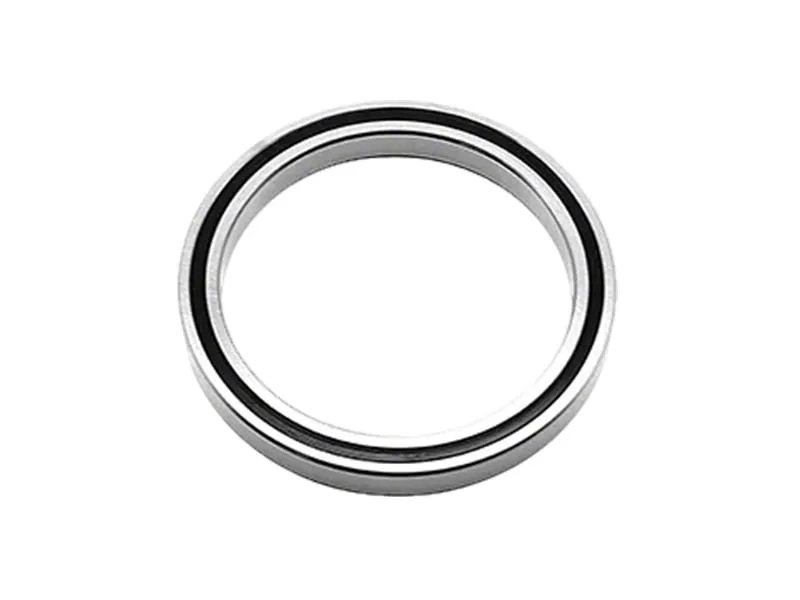
Ring distortion occurs when excessive or uneven forces are applied to the inner or outer rings of a bearing during installation. In thin section bearings, the ring walls are much thinner than those in standard bearings, which means even minor deviations in mounting can lead to permanent deformation. Distorted rings compromise the bearing’s ability to rotate smoothly, introduce uneven stress distribution, and may cause premature failure of rolling elements or raceways. The consequences are often amplified in high-speed or precision applications, where even microscopic deformations can translate into significant operational inefficiencies.
Common causes of ring distortion include:
Misalignment during assembly – Improper alignment between the shaft and housing can introduce bending stresses on the bearing rings.
Excessive mounting force – Using hammers or presses without appropriate controls can deform thin rings.
Incorrect tool usage – Applying pressure on the wrong surfaces or using non-specialized tools increases the risk of ring damage.
Thermal expansion errors – Rapid heating or cooling without proper guidance can induce uneven expansion, leading to distortion.
Best Practices for Preventing Ring Distortion
Preventing ring distortion begins with careful planning and the use of proper installation techniques. Engineers and technicians should follow a systematic approach to reduce the risk of damage:
1. Select the Right Tools and Equipment
Specialized mounting tools such as bearing sleeves, spanner rings, and hydraulic presses are essential for thin section bearings. These tools are designed to apply uniform force to the bearing rings without concentrating pressure on specific points, which minimizes the risk of distortion. Additionally, torque-controlled wrenches and alignment jigs help ensure that the applied forces remain within manufacturer-recommended limits.
…
For more detailed information on the preventing ring distortion in thin section bearing installation, please click to visit:https://www.prsbearings.com/a/news/preventing-ring-distortion-in-thin-section-bearing-installation.html