
A muffle furnace for annealing and heat treatment is not simply a heated box. It is a controlled thermal environment where temperature uniformity, heating rate, atmosphere, and repeatability determine whether a metal part becomes softer, stronger, or more ductile. For buyers, the challenge is matching furnace design to the actual process rather than choosing the highest temperature or the lowest price. Whether you are relieving stress in machined steel, annealing copper, hardening tool steel, or processing ceramics, the right muffle furnace protects the workload from contamination and delivers a repeatable thermal profile. This article explains what to evaluate, how the furnace supports annealing and heat treatment, and where Heatest Instrument fits into a practical procurement plan.
What a Muffle Furnace Does in Annealing and Heat Treatment
In a muffle furnace, the workload sits in an inner chamber separated from the heating elements and combustion products. The muffle acts as a barrier, so the material is heated primarily by radiation and convection from the chamber walls. This design reduces direct contamination from element scaling, dust, and exhaust gases, which is important for clean annealing and heat treatment. It also helps protect sensitive alloys, laboratory samples, and small precision parts from uneven heat and surface reactions.
Annealing uses controlled heating and cooling to soften metal, relieve internal stresses, refine grain structure, and improve machinability. Heat treatment covers a broader family: normalizing, hardening, tempering, solution treatment, aging, stress relief, and sintering. A muffle furnace supports these processes when it can hold a set point, ramp at a defined rate, and distribute heat evenly around the load.
- Clean chamber environment for sensitive alloys and lab samples.
- Uniform temperature zones to avoid hard or soft spots.
- Programmable profiles for ramp, soak, and controlled cooling steps.
- Repeatable results for quality control and process validation.
Critical Performance Factors for Annealing and Heat Treatment
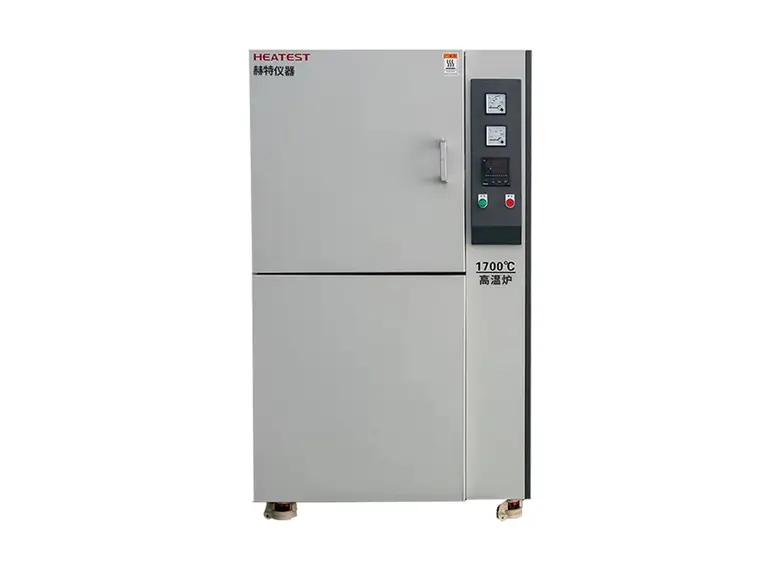
Temperature Uniformity and Control Accuracy
A furnace may claim a maximum temperature, but the more useful question is how evenly it holds temperature across the usable chamber. Poor uniformity can leave part of a load under-annealed while another part is over-heated, causing inconsistent hardness, grain size, or residual stress. Look for PID controllers, multiple thermocouples, over-temperature protection, and documented uniformity data. For annealing, a narrow soak band helps achieve consistent grain growth and hardness. For hardening, it reduces the risk of incomplete austenitization or excessive grain coarsening.
…
For more details on muffle furnaces used for annealing and heat treatment, please click here: https://www.lyheatest.com/electric-furnace-knowledge/muffle-furnace-1/