
In crane design and operation, the slewing bearing plays a decisive role in ensuring safety, stability, and long-term performance. Many engineers and procurement managers focus on lifting capacity and boom length, but they often underestimate how critical accurate load calculation is for slewing bearings. If you select the wrong bearing or miscalculate the load, the result can be premature failure, excessive wear, or even catastrophic accidents.
This guide explains the slewing bearing load calculation formula for cranes in a clear, practical way. It combines engineering logic with real-world application experience so that readers can confidently apply the method in design, selection, and maintenance.
What Is a Slewing Bearing and Why Load Calculation Matters
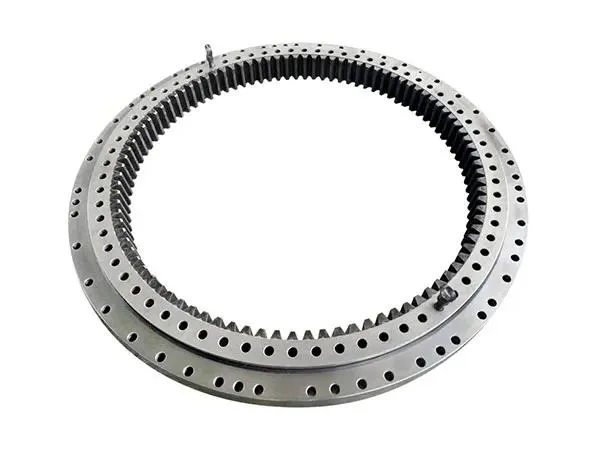
A slewing bearing is a large-diameter rolling element bearing that simultaneously carries axial force, radial force, and tilting moment. Cranes rely on slewing bearings to rotate the superstructure smoothly while supporting dynamic loads.
Accurate load calculation matters for three key reasons:
It ensures the bearing can handle combined loads without failure
It extends service life and reduces maintenance costs
It helps engineers select the correct bearing model and size
Without proper calculation, even a high-quality bearing cannot perform reliably under real working conditions.
Understanding the Three Core Loads in Crane Applications
Before discussing formulas, it is essential to understand the three types of loads acting on a slewing bearing:
1. Axial Load (Fa)
Axial load refers to the vertical force acting along the axis of rotation. In cranes, this includes:
Weight of the superstructure
Lifted load
Additional attachments
2. Radial Load (Fr)
Radial load acts perpendicular to the axis. It mainly comes from:
Wind force
Horizontal inertia during slewing
Structural misalignment
3. Tilting Moment (M)
Tilting moment is the most critical factor in crane applications. It results from the load acting at a distance from the rotation center.
Typical contributors include:
Boom length and angle
Load radius
Offset center of gravity
Slewing Bearing Load Calculation Formula
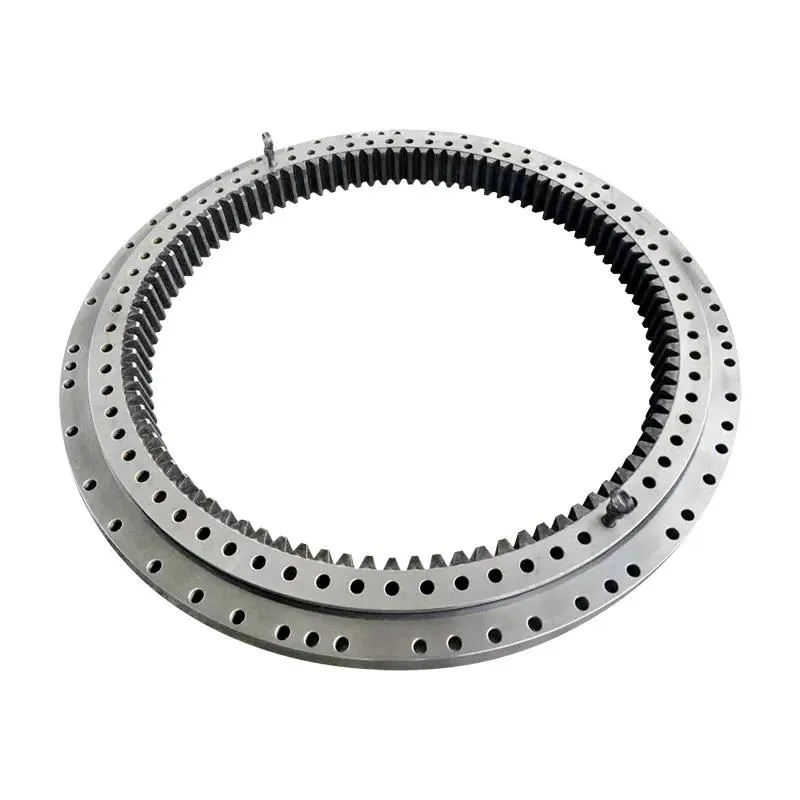
In practical engineering, the combined load condition is simplified into an equivalent load for bearing selection. The commonly used calculation approach is:
…
For more detailed information on how to calculate the load on a crane slewing bearing, please click here: https://www.mcslewingbearings.com/a/news/slewing-bearing-load-calculation-formula-for-cranes.html