
In the competitive landscape of wind energy manufacturing, every minute saved on the production floor translates directly to lower costs and faster time-to-market. Welding the massive steel sections that form wind turbine towers is one of the most time-consuming and quality-critical operations. Heavy duty rotators have emerged as a game-changing solution to accelerate this process while maintaining weld integrity. This article examines how the right rotator system can significantly increase wind tower welding speed, and why the BOTA series of heavy duty rotators has become a preferred choice among leading fabricators worldwide.
1. The Critical Role of Welding Speed in Wind Tower Manufacturing
Wind tower sections typically range from 4 to 6 meters in diameter and can weigh over 100 tons. The longitudinal and circumferential welds must meet stringent standards for fatigue resistance and structural soundness. Manual or semi-automatic welding processes often suffer from frequent stops for repositioning, inconsistent travel speeds, and operator fatigue. Slow welding speeds create bottlenecks in the production line, limit throughput, and increase overhead costs. Improving welding speed by even 20-30% can yield substantial annual capacity gains for tower manufacturers operating multiple shifts.
2. How Heavy Duty Rotators Transform the Welding Process
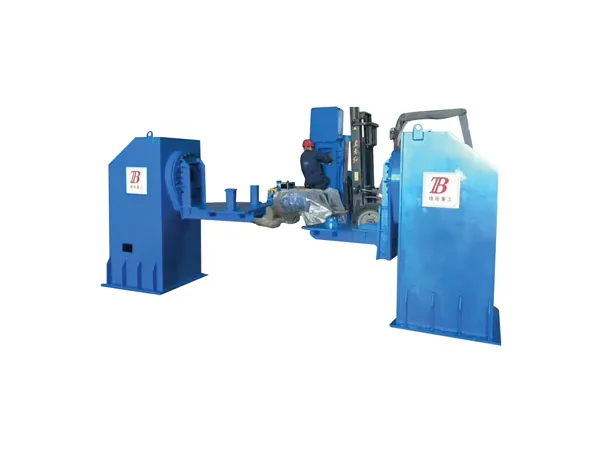
Heavy duty rotators, also known as turning rolls or pipe rotators, are motorized systems that rotate the workpiece around its longitudinal axis. This allows the welding torch to remain stationary or travel along a fixed path while the tower section turns at a controlled speed. This configuration delivers several speed advantages:
- Continuous rotation eliminates repositioning downtime. Once the section is clamped, welding can proceed without stopping to rotate the assembly manually.
- Optimal welding position maintained. The workpiece can be rotated to keep the weld pool in the ideal 1G or 2G position, maximizing deposition rates and reducing rework.
- Higher travel speeds possible. Automated or semi-automated welding systems can operate at consistent, optimized travel speeds that are difficult to achieve manually.
- Reduced preheat and interpass wait times. Uniform rotation distributes heat evenly, allowing faster interpass temperature control.
2.1 Synergy with Automated Welding Systems
Modern heavy duty rotators integrate seamlessly with robotic or mechanized welding heads. The rotator acts as a precision positioning axis, enabling multi-pass welding with minimal operator intervention. This combination can increase welding speed by 40-60% compared to manual rotation methods, based on field data from large-scale wind tower production.
3. Key Features to Look for in Heavy Duty Rotators
Not all rotators are created equal. To achieve the highest welding speed without compromising quality, engineers must evaluate these critical parameters:
- Load capacity and diameter range. Ensure the rotator can handle the heaviest tower section with a safety factor. BOTA rotators offer capacities from 50 tons to over 300 tons.
- Rotation speed control. A wide speed range with precise regulation (e.g., 0.1–2.0 m/min) supports different weld parameters. Variable frequency drives and closed-loop feedback are essential.
- Roller configuration. Self-aligning rollers accommodate conical or irregular tower shapes, maintaining constant contact pressure for stable rotation.
- Durability and maintenance. Heavy-duty gearboxes, sealed bearings, and high-torque motors reduce downtime. BOTA units feature hardened steel rollers and reinforced frames for years of trouble-free operation.
- Integration interfaces. Supports for welding tractors, torches, flux recovery systems, and remote control panels streamline workflow.
4. Why BOTA Heavy Duty Rotators Deliver Superior Performance
…
For more detailed information on using heavy-duty rotators to increase wind tower welding speed, please click here: https://www.bota-weld.com/en/a/news/increase-wind-tower-welding-speed-with-heavy-duty-rotators.html