In the demanding environment of modern steel and metal production, rolling mills endure extreme mechanical forces and generate immense heat during operation. The performance of these mills is directly influenced by how effectively excess heat is managed. Cooling systems are not just auxiliary—they are central to ensuring product precision, reducing equipment wear, and optimizing energy usage. Among the cooling strategies deployed, water-based and oil-based systems are the most prevalent, each offering unique advantages and presenting specific operational challenges. Understanding these differences is essential for engineers, plant managers, and maintenance teams striving for optimal efficiency, reduced downtime, and cost-effective production.
The Critical Role of Cooling in Rolling Mills
Metal slabs or strips undergoing rolling are subjected to high friction and deformation stresses. This process generates significant heat, which, if not properly controlled, can compromise both product quality and equipment integrity. Excess heat can lead to thermal expansion, roll distortion, surface defects, accelerated bearing wear, and damage to gears and hydraulic components. Over time, this can disrupt production schedules, increase maintenance frequency, and raise operational costs.
Effective cooling systems serve multiple vital purposes:
Temperature regulation: Maintaining precise roll and metal temperatures prevents warping, uneven thickness, and surface imperfections.
Lubrication support: Certain cooling fluids double as lubricants, lowering friction and energy demands on the mill.
Equipment protection: Consistent cooling prolongs the life of rolls, bearings, hydraulic systems, and structural components.
Energy efficiency: Proper heat management reduces the load on auxiliary cooling and ventilation systems, saving energy.
Selecting the right cooling method—whether water, oil, or a hybrid solution—requires careful consideration of operational demands, material characteristics, environmental constraints, and cost implications.
Water Cooling Systems: High Efficiency at Low Cost
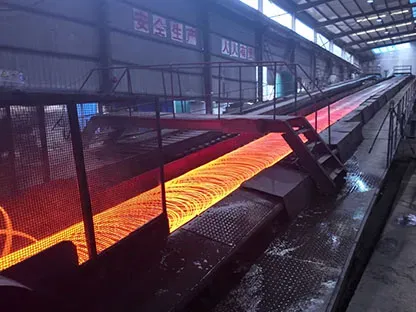
Water-based cooling remains the most widely adopted solution in rolling mills. Its popularity stems from water’s exceptional ability to absorb and transfer heat. Typically, water is circulated through the rolls or roll housings, collecting heat and directing it to external heat exchangers for dissipation.
Advantages of water cooling include:
Rapid heat absorption: Water’s high specific heat allows it to quickly remove thermal energy from high-temperature operations, maintaining dimensional accuracy and surface integrity.
Low pumping energy: Its low viscosity reduces the energy required to circulate fluid across channels and through cooling loops.
Cost-effectiveness and accessibility: Water is inexpensive, abundant, and easy to replenish, simplifying maintenance and operational planning.
Challenges of water cooling:
Corrosion potential: Untreated water can corrode rolls, piping, and heat exchangers, demanding rigorous water treatment and monitoring.
Temperature-related issues: In colder climates, water requires antifreeze solutions or heating, and mineral scaling may gradually reduce flow efficiency.
Limited lubrication: Water cannot provide sufficient lubrication, so additional lubricants are often necessary to reduce friction during rolling.
…
For more detailed information about the function of rolling mill cooling systems, please click to visit: https://www.gyssljx.com/a/news/function-of-rolling-mill-cooling-system.html