
Cold rolling technology is an indispensable key process in modern metal manufacturing, playing a vital role particularly in automotive production, home appliance manufacturing, aerospace materials, and high-precision machinery industries. If you are new to metalworking or wish to deepen your understanding of cold rolling mill operations, this beginner’s guide will help you fully grasp the core principles, workflow, and common misconceptions of the cold rolling process.
What is a Cold Rolling Mill? Definition and Applications of Cold Rolling
Cold rolling refers to a processing technique performed at room temperature, where immense pressure is applied through rolling mill rolls to reduce the thickness of metal sheets while enhancing surface quality. Unlike hot rolling, which requires high-temperature heating, cold rolling is conducted without heating. Consequently, the final products exhibit:
Higher dimensional accuracy
Superior surface finish
More uniform mechanical properties (strength, hardness, etc.)
Cold-rolled products are commonly used in:
Automotive bodies and structural components
Appliance housings
Precision mechanical parts
Manufacturing of strip steel, thin plates, and high-precision foils
Layman’s terms: Cold rolling is like “using precision rollers to flatten dough,” making metal sheets thinner, straighter, and stronger.
Core Working Principle of Cold Rolling Mills
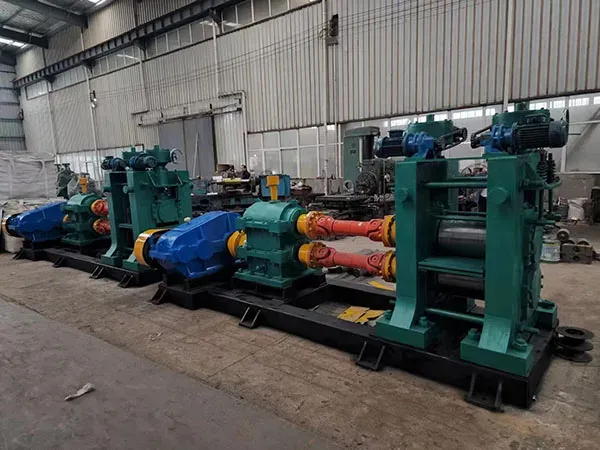
1. Plastic Deformation of Metal Under High Pressure
Cold rolling mills typically consist of two high-strength rolls. As metal sheets pass through the roll gap, they undergo immense compressive stress, causing plastic deformation that achieves thinning and strengthening.
Roll Gap Compression: Material thickness is compressed as it passes through the roll gap.
…
For more detailed information on the working principle of cold rolling mills, please click to visit: https://www.gyssljx.com/a/news/cold-rolling-mill-working-principle.html