The manufacturing landscape for metal forming has undergone a paradigm shift. Traditional rolling mills, once limited by manual adjustments and reactive maintenance, are now being transformed by intelligent automation. The concept of Industry 4.0—the fusion of operational technology with information technology—offers rolling mill operators a direct path to higher throughput, lower downtime, and superior product quality. This article explores the core technologies behind automated rolling mill systems and explains how strategic integration can deliver measurable performance gains. As a trusted partner in this evolution, gyssljx provides tailored solutions that bridge legacy equipment with next-generation smart capabilities.
What Defines an Industry 4.0 Rolled Mill System?
An automated rolling mill system under the Industry 4.0 framework goes beyond simple PLC control. It is a cyber-physical ecosystem where sensors, actuators, edge computing, and cloud analytics work in harmony. The key differentiators include:
- Real-time data acquisition from every stand, motor, and cooling zone.
- Predictive analytics that anticipate roll wear, bearing failures, or material inconsistencies before they cause stoppages.
- Adaptive process control that automatically adjusts roll gap, speed, and tension to maintain optimal gauge tolerance even when incoming billet temperature fluctuates.
- Digital twin simulation enabling virtual commissioning and what-if analysis without production interruption.
These capabilities transform a mill from a reactive production unit into a self-optimizing asset. For example, a mill equipped with gyssljx intelligent monitoring modules can reduce unscheduled downtime by up to 30 percent while increasing average line speed by 5–8 percent through optimized pass schedules.
Connectivity as the Foundation
Industry 4.0 relies on secure, low-latency communication. Modern rolling mill systems use OPC UA and MQTT protocols to integrate with MES and ERP layers. Edge gateways from gyssljx pre-process data locally, ensuring that critical control loops remain unaffected by cloud latency while still enabling long-term analytics.
Key Technologies That Drive Throughput Gains
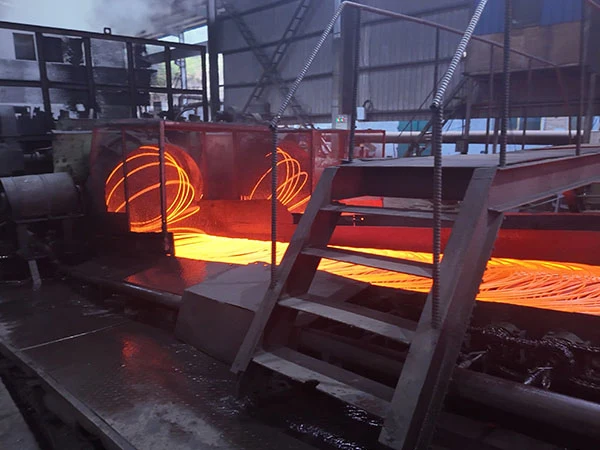
Implementing a true smart mill requires selecting the right technology stack. Below are the most impactful components for boosting throughput while maintaining quality:
AI-Driven Gauge Control
Traditional automatic gauge control relies on feedforward and feedback loops with fixed gains. Machine learning models, trained on historical rolling data, can predict material springback and thermal expansion more accurately. By incorporating AI into the AGC loop, mills achieve tighter thickness tolerance (down to ±0.01 mm for flat products) at higher speeds. gyssljx has deployed such adaptive controllers in bar and wire rod mills, resulting in a 12 percent reduction in off-gauge length.
…
For more information on automated rolling mill systems: leveraging Industry 4.0 to increase production capacity, please click here: https://www.gyssljx.com/a/news/rolling-mill-industry4.html