With the development of clean coal technology, the coal slime water process in coal preparation plants shall be limited by 0.5mm to determine the classification of coal slime. In order to meet the needs of the market, especially the requirements for dehydration of coal slime with particle size of 2~0.5mm in the separation process segmentation , it is necessary to develop a new type of centrifuge.

In this way, the coal can be recovered to the maximum extent, thereby improving the recovery rate of clean coal, improving the economic benefits of coal preparation enterprises, protecting the environment, and saving energy. Such a centrifuge product has a large processing capacity and low product moisture, which greatly reduces the burden on the coal slime water treatment system, achieves good results, and can simplify the coal slime water treatment process.

The centrifuge machine developed this time is mainly used for the dehydration of 2~0.5mm fine coal. The coal centrifuge has the characteristics of small investment, small system transformation, and good process effect. It will become the first choice for the transformation of old plants and new coal preparation plants. , due to the small particle size of the separated solid particles, it can not only be used in the coal preparation industry, but also suitable for solid-liquid separation in the chemical, pharmaceutical, food and environmental protection industries, with good business and social prospects!

The separation and dehydration of coal centrifuge is to use gravity, mechanical force or heating and drying methods to separate solids and liquids to reduce the moisture content of wet materials. The use of wet dehydration operation is an important part of coal preparation in coal preparation plants. The main purpose of coal centrifuge dehydration separation is:
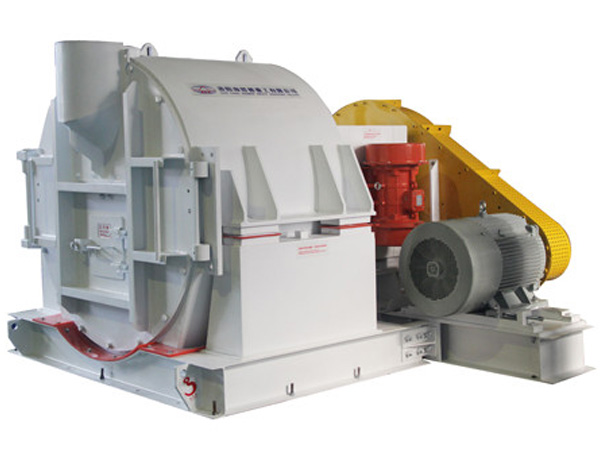
coal centrifuge

(1) Reduce the moisture in coal preparation products to ensure the transportation needs. In coal preparation plants, the comprehensive moisture content of various clean coals is generally required to reach 8% to 10%, and the requirement in alpine regions is below 8%. Wet coal preparation will contain a lot of moisture. If coking coal is used for coal preparation, the coal moisture will be high, not only the coking time will be longer, the production volume will be reduced, the amount of gas used for the coke oven will be larger, and the service life will be shortened.

(2) Wash and reuse to save water. Wet coal preparation consumes a lot of water. Under normal circumstances, the jig machine uses 3 tons of water for processing 1 ton of raw coal; 1 ton of raw coal uses 0.7 tons of water, and 1 ton of fine coal requires about 1.2 to 2.0 tons of water, so our water resources will cause a lot of waste.

In addition, before wind coal preparation, if the coal contains a lot of water, it needs to be dehydrated first. Coal separation and dehydration methods include: gravity dehydration, mechanical dehydration, thermal dehydration, physical chemistry, etc. Several commonly used methods are: gravity dehydration, mechanical centrifugal dehydration and thermal heating dehydration. In the coal preparation plant, the dehydration of coal is carried out in stages.

…

Click to visit for details:https://www.hsd-industry.com/products/coal-centrifuge/
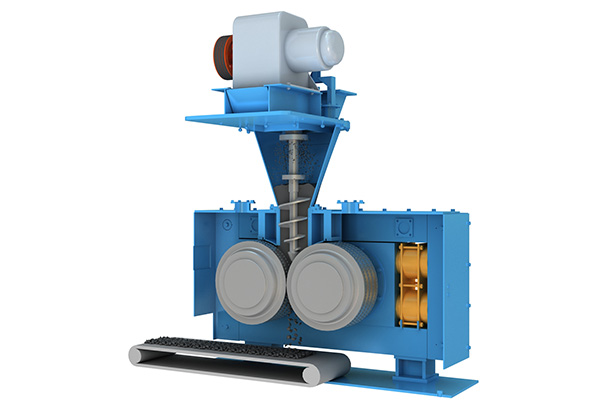
The metal briquette machine is a device that presses metal scraps such as copper scraps/iron scraps/aluminum scraps with adhesives into balls. In response to environmental protection policies, the good initial strength of the ball shape is conducive to furnace reuse. The metal briquetting machine plays an important role in the forming process, and the pressing roller is the core part of the equipment. The diameters of the two pressure rollers are the same, the axes are parallel to each other, and there is a certain gap. There are hemispherical dimples arranged regularly, of the same size and in a uniform shape on the roller sleeve. When the motor starts running, the pair of rollers start turning at the same speed but in opposite directions. When the material passes through the joint of the pair of pressure rollers, it is under pressure and its volume is compressed and becomes smaller.

Metal briquetting machine
This ball briquetting machine presses various metallurgical industry waste such as copper filings, iron filings, and aluminum filings into balls to avoid oxidation, reduce packaging costs, improve product transportation capacity, and achieve the purpose of waste utilization and pollution reduction. The double output shaft reducer structure is adopted to improve the precision of the roller; the roller surface of the pressure roller is made of high-quality bearing steel, and the surface hardness can reach above HRC58; The process is processed to ensure its hardness and strength; the pre-pressing machine adopts a speed-regulating motor, and all wear parts are surfacing with wear-resistant alloys to improve service performance and life; the hydraulic standing is placed, it can be automatically started and stopped, and the balance pressure can be automatically controlled.

For more details, click to visit:https://www.zymining.com/briquetting-machine/metal-briquette-machine

In China, soilless cultivation began in the 1970s, mainly to cultivate soilless seedlings of rice and vegetable crops. At this time, the cultivation method was mainly flat cultivation. With the development of economy and the improvement of people’s living standards, the cultivation form of soilless culture has begun to be used for soilless cultivation of vegetables, flowers, fruits and Chinese medicinal materials.

In recent years, the vertical cultivation mode has been vigorously advocated in the plant planting industry. Among them, vertical cultivation is an important development direction of soilless cultivation, and in vertical cultivation, vertical growing racks are an important tool to realize vertical cultivation. Today’s article is mainly about We introduce what is a vertical growth rack, and the classification of vertical growth racks.

vertical growth racks

1. What is a vertical growing rack?

The form of the growth frame can be divided into trough cultivation, bag cultivation and pot cultivation according to the difference of soilless cultivation troughs. According to the space arrangement of soilless cultivation troughs, it can be further divided into plane cultivation and vertical cultivation.

Soilless cultivation Vertical cultivation is also known as three-dimensional cultivation. The growth of plants in vertical growth racks develops in multiple directions, which can make full use of various cultivation conditions such as time, space and light, exert the production potential of limited ground , and effectively improve land and light, heat and water. The utilization rate of natural resources such as , fertilizer, gas, etc., to make the best use of the land and resources, to establish a good agricultural ecological economic complex, to solve the contradictions such as more people and less land, and competition between food crops and other economic crops, etc. Improving the output rate per unit of land is a form of cultivation and planting that achieves high quality, high yield, high efficiency, energy saving and environmental protection. Compared with flat cultivation, the utilization rate of land by vertical cultivation can be as high as 4 to 8 times, and the management effi ciency of vertical cultivation in soilless cultivation is also much higher than that in flat cultivation, and it is very easy to realize automatic cultivation.

…

Details can be accessed here: https://www.etegreen.com/blog/classification-of-vertical-growth-racks/

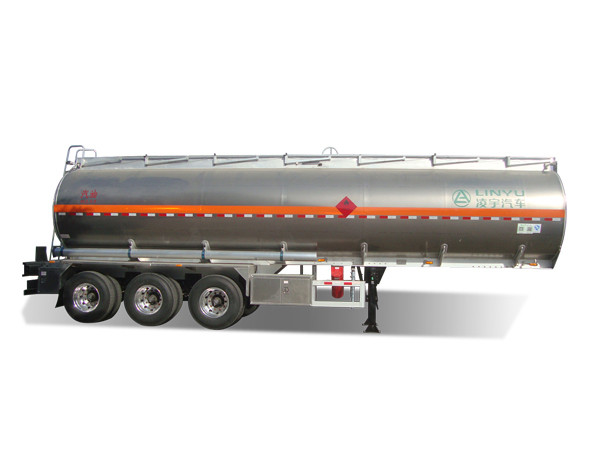
In daily life, oil tank truck is a very common means of transporting dangerous goods, because its transportation objects are mostly all kinds of flammable and explosive oil products, so the safe transportation of oil tanker is the key of every tanker driver. What should be paid attention to, what are the common oil tank truck faults, and how should we deal with these problems? The following is a tank truck manufacturer–CIMC LINYU, to analyze the common oil tank truck faults and solutions.

Oil Tank truck faults can generally be divided into indirect failures and sudden failures. When a failure occurs, we need to first determine the cause of the failure, and then carry out targeted treatment.

1. The oil absorption of the oil tank truck is abnormal

The reasons for the abnormal oil absorption of the tanker are generally: there is no oil in the oil pump; the oil absorption depth is more than 5m; the valve opening position is not correct. To solve this problem, we can fill the oil tank to at least 10L, and adjust the valve to the appropriate position That’s it. If the fuel tank of the tanker cannot discharge oil, it may be an impurity oil discharge pipe. In this case, just cleaning the oil pipe can solve the problem.

Oil tank truck


2. The oil tank truck cannot absorb oil or absorb less oil

The reasons for the oil tanker not being able to absorb oil or the amount of oil being absorbed are: the suction pipe part is not tightly sealed; the gap of the oil pump is increased. At this time, we only need to make the seal tight, and check and repair the oil pump.

3. The power take-off box of the oil tank truck is abnormal

The reasons for the abnormality of the power take-off box of the tanker are as follows:

(1) The pressure of the car is insufficient, and the power take-off box is not in gear;

(2) The air path is not tightly sealed, and the power take-off box is fooled;

(3) The air chamber is damaged, and the power take-off box is not hooked;

(4) Too little lubricating oil or impurities in the power take-off box;

(5) Wear of power take-off parts

For the above problems, we usually only need to have enough air in the pneumatic power take-off box, so that the reading of the air pressure gauge is above 0.6Mpa, the air circuit is strictly sealed, check the air chamber in time, refuel or update the lubricating oil, dismantle and inspect, clean and replace the worn parts. Can.

…

Details can be accessed here:https://www.ly-cimc-linyu.com/a/news/Oil-tank-truck-faults.html

In the production activities of mining, metallurgy, coal, machinery, electric power and other industries, various types of conveying equipment are often used. Belt conveyor is one of the most widely used equipment. Belt conveyor has reliable operation and high degree of automation. The characteristics of large conveying volume, long conveying interval and convenient maintenance are the equipment that must be used by major manufacturers to set up rhythmic and high-efficiency product production lines.

As we all know, belt conveyors are often subject to various wear and tear during work due to the long time, large conveying capacity, and long-distance transportation, and the service life of belt conveyors is often greatly reduced. Therefore, according to the structural characteristics of the belt conveyor, the editor has researched and sorted out a variety of methods to improve the life of the belt conveyor, hoping to help you.belt conveyor

First of all, do the daily maintenance of the belt conveyor

Doing a good job in the daily maintenance of the belt conveyor can reduce the probability of failure of the belt conveyor during transportation. It can also increase the life of the belt conveyor while improving the efficiency of the belt conveyor. The daily maintenance of the belt conveyor mainly includes the following aspects:

1. Check whether the state of the motor reducer is normal and whether it can work normally.

2. Check the connection of each fastener of the equipment for looseness.

3. Check whether the tension of the conveyor belt is in good condition and whether it can run normally.

4. Check the surface of each part of the conveyor for residual materials.

5. Whether the idler runs flexibly and without deformation.

6. Check the lubrication effect of each electronic component and replace it regularly.

Secondly, targeted measures can be taken for the life of the belt conveyor

1. Protection: The protection of the belt conveyor mainly refers to the protection of the impact of the external environment on the belt conveyor, such as adding a protective cover to reduce the impact of rain, frost and other bad weather on the belt conveyor.

…

Details can be accessed here: https://www.zymining.com/blog/the-life-of-the-belt-conveyor.html

The calcium hydroxide production line adopts a double-shaft stirring structure and consists of a bucket elevator, a special pulse dust collector, a digester, a semi-finished product conveyor, a powder separator, and a PLC control system. The calcium production line has a series of advantages such as environmental protection, automation, and reduction of labor consumption. So do you know the use of calcium hydroxide production line, what should we pay attention to, and how should we ensure the quality of calcium hydroxide in the production process ?

Precautions for the use of calcium hydroxide production line?

1. Calcium hydroxide production line usually works in a high temperature environment, the ambient temperature is high, and the normal working equipment will emit a lot of heat. Therefore, some equipment on the calcium hydroxide production line may generate heat due to continuous work during the production process. We need to prepare some cooling and freezing devices to cool down the equipment when needed to avoid wear and tear of components.

calcium hydroxide production line


2. When working in a high temperature environment, we need to consider the safety and reliability of electricity consumption to ensure that the calcium hydroxide equipment and the circuit of the production line workshop are smooth. The calcium hydroxide equipment can be matched with some electrical equipment , and the detection of electrical equipment can be done in time. If it is found that the line is aging or abnormal, it should be stopped in time.

3. Do a good job in the anti-rust and anti-corrosion measures of the calcium hydroxide production line. Such as long-term rust prevention on exposed metal surfaces, that is, unpainted places: coating and electroplating processes can be used, and corrosion-resistant alloys can be used to prevent rust in the later stage. This work can be started from two aspects, one is to paint the equipment, and the other is to do a good job in post-maintenance and cleaning of the equipment to reduce the probability of rusting of calcium hydroxide equipment.

…

Details can be accessed here: https://www.ly-gaifeng.com/blog/the-use-of-calcium-hydroxide-production-line.html

In modern agricultural production, tractor is a very important machine, and no other machine can replace the work of tractor. Therefore, tractor is widely used in agricultural production at home and abroad.

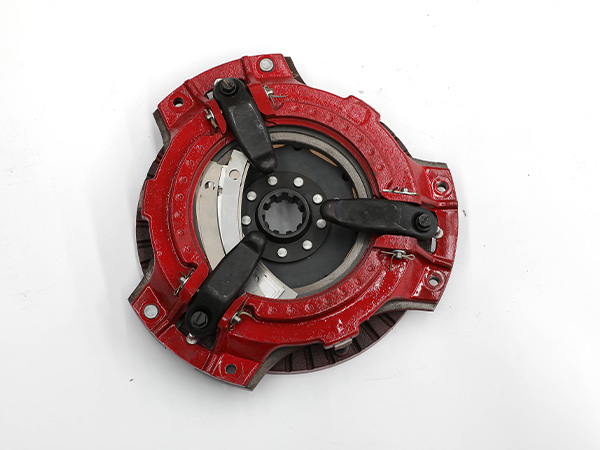
The use of the tractor clutch can ensure the smooth shifting and shifting of the tractor, and is one of the important accessories to ensure the normal operation of the tractor. With the development of society and the advancement of science and technology, knowledge such as electricity , heat, and information technology has been gradually applied to the machinery manufacturing industry, and the manufacturing technology of tractors has also improved, and has begun to gradually develop towards informatization, which has a great impact on the quality and performance of tractor clutches. Requirements have been further improved. Therefore, the research on the working principle of tractor clutch, how to use it and its maintenance and repair is also the work that tractor manufacturers and users have been doing all the time. Today, I will simply share with you how the tractor clutch works, precautions for use and how to overhaul.

How the tractor clutch works can be understood from its structure and working principle.

tractor clutch


The composition and working principle of the tractor clutch

The tractor clutch is mainly composed of four parts, namely: the active part, the driven part, the pressing device and the operating mechanism. The clutch is mainly composed of a flywheel and a pressure plate of the clutch. The flywheel is directly connected to the crankshaft of the engine and is controlled by the crankshaft; the clutch pressure plate is connected to the gearbox, and the transmission force is transmitted to the gearbox through the combination of the flywheel and the clutch pressure plate. The gearbox performs shifting work. In the process of using the clutch, there are two states, namely the combined state and the disengaged state. When the clutch is in the engaged state, the pedal of the clutch is at the highest position, at this time, there is no contact between the release lever in the clutch and the release bearing, and the clutch pressure plate presses the driven plate, thereby transmitting the transmission force to the transmission; while in the disengaged state When the clutch pedal is stepped on, the gap between the release lever and the release bearing is eliminated. At this time, the pressure plate and the release lever move downward under pressure, causing the pressure on both sides of the driven plate to decrease and disappear. The transmission force is transmitted to the transmission, that is, the disengagement state of the clutch.

Precautions for the use of tractor clutches

1. When starting, the clutch pedal should be lifted correctly

When the tractor is just starting, the clutch pedal should be stepped on correctly, and the clutch plate should not be lifted violently, which will make the clutch combination not stable enough and cause great damage to the friction plates. The correct starting method should be “fast, slow, slow”. When the tractor starts, quickly make it in a low gear, and pause to find the contact point at this time, and then change to a high gear to protect the safety of the tractor clutch. , to avoid unnecessary safety accidents caused by clutch damage when the tractor starts.

…

Details can be accessed here: https://www.syclutch.com/news/how-tractor-clutches-work.html

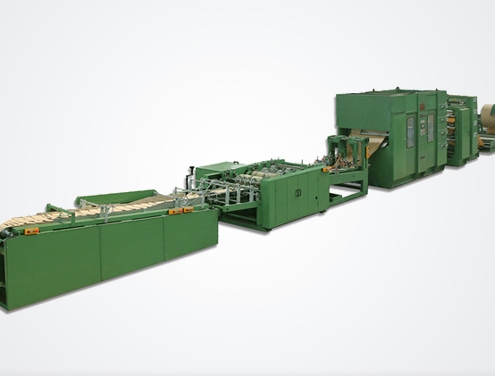
Paper tube machine is an important mechanical equipment specially used for paper tube production. Many industries will use this equipment. In order to ensure the normal operation of the paper tube machine and ensure production efficiency, when we use the paper tube machine, we must follow the paper There are also many problems that need to be paid attention to in the use of equipment.

What is the operating procedure of the paper tube machine?

1. Before work.

(1) The environment around the paper tube machine should be kept clean, and the materials and related auxiliary tools to be processed should be prepared. The operator should wear tight clothes or fasten the clothes. It is strictly forbidden for the operator to wear skirts , slippers, and loose hair to operate the equipment.

(2) Check whether the various parts of the paper tube machine can work normally.

(3) Before starting, use a special tool to clean the abrasive shaft, remove the excess glue in the mold shaft, and then blow it with compressed air.

(4) Be sure to refuel the brass sleeve before starting the machine.

(5) Before starting, the ventilation valve must be refueled frequently.

Paper tube machine


2. Work.

(1) Before entering the job, the operator must go through relevant training, know how to use the equipment, understand the structure and principle of the paper tube machine, and understand the safety protection.

(2) Untrained or unqualified employees shall not use the paper tube machine.

(3) When operating the equipment, operators should keep their energy and concentration, and must not drive desertions to avoid accidents.

(4) When cutting the paper tube, keep a certain distance from the machine, and wait for the paper tube to be placed before cutting.

(5) When the equipment is running, if it is found that the machine is abnormal or faulty, the machine should be stopped immediately and the abnormality should be dealt with in time.

(6) During the operation of the paper tube machine, the operator is not allowed to leave the work post without permission. When leaving, the power supply needs to be cut off.

3. After the work is over.

(1) After the production work is completed, all power must be turned off, and the tool must be placed in the designated position.

(2) Clean around the machine and maintain hygiene.

…

Details can be accessed here:https://www.lyhuatianm.com/products-information/paper-tube-machine-operating-procedures.html

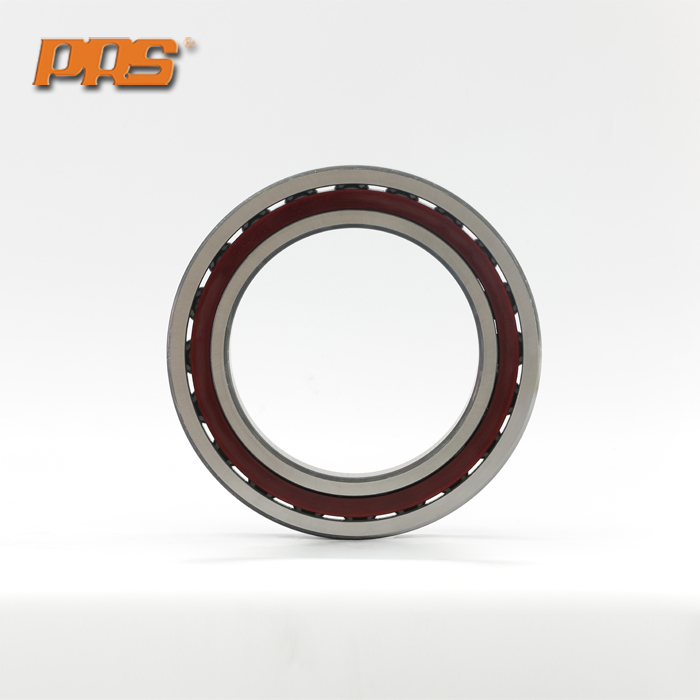
Harmonic reducer bearing, as the name suggests, is a special bearing for harmonic reducer. The special bearing of the harmonic reducer generally uses the crossed roller bearing. The bearing selection of the harmonic reducer should be based on the different occasions of the equipment, and different bearing models should be selected. Generally speaking, it can be divided into CSF/CSG series and SHF series. There are two types of /SHG series, CSF/CSG series refers to the outer ring split bearing and inner ring integral bearing, SHF /SHG series refers to the outer ring and inner ring are integral bearings.

The bearing of the harmonic reducer has a compact shape, has its own mounting holes, is easy to install, and has good performance such as high rigidity and easy installation, high rotation accuracy and high composite bearing capacity, and can bear axial, radial and overturning moments at the same time. The load in each direction is suitable for different types of harmonic reducers.

Harmonic Reducer Bearing

When selecting the bearing of the harmonic reducer, in addition to the application, it is also necessary to consider the installation method and size of the bearing. At present, the bearing selection of the harmonic reducer can refer to the following models:

HRB type, this one is a bearing with a whole inner ring and a separate outer ring. It is the basic model of the harmonic reducer bearing. The outer ring is divided into two pieces, and the inner ring is an integral structure, which is suitable for occasions that require high rotation accuracy of the inner ring.

HRBH type, this bearing has an integral structure of the inner and outer rings. The installation has no effect on the performance, and the rotation accuracy and torque will be more stable. At the same time, the bearing adopts an ultra-thin design. There are no mounting holes in the outer ring and the inner ring. The support base is fixed.

…

Details can be accessed here: https://www.prsbearings.com/a/news/Harmonic-reducer-bearing-selection.html

In cranes, tower cranes, truck-mounted cranes and other lifting equipment, the slewing bearing plays a very important role. It can form a connection between the chassis and the upper structure of the machine, allowing the crane to rotate 360 ​​degrees, while bearing the axial, radial and direction and overturning moment. The open design of the crane slewing ring allows the hydraulic system and other control components to pass through the slewing ring, making more efficient use of the limited space in the hoisting equipment.

As an important “joint” of the crane, the slewing bearing of the crane affects the performance of the crane and determines whether the crane can work normally and efficiently. Therefore, it is very necessary to properly maintain the slewing bearing of the crane.

The maintenance of the crane slewing bearingshould do the following:

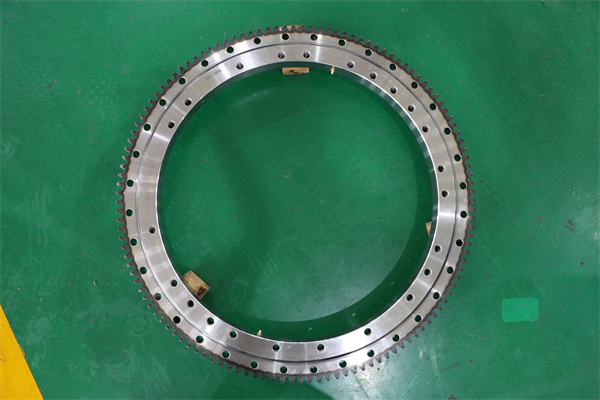
crane slewing bearing


(1) We must ensure that the mounting support of the slewing bearing has sufficient rigidity and the mounting surface is flat. Before the slewing bearing is installed, the bearing should be destressed to reduce the deformation of the slewing bearing. In addition, when the crane slewing bearing is installed, the contact surface between the bearing and the slewing bearing should be kept clean.

(2) The tooth surface of the slewing bearing should be regularly cleaned of debris and greased.

(3) After the first 100 hours and 500 hours of operation of the slewing bearing, the pre-tightening torque of the bolts should be checked respectively. After that, the preload torque should be checked every 1000 hours of operation. This can ensure the reliability of bolt work and avoid insufficient bolt preload.

(4) During the working process of the crane slewing bearing, it is necessary to pay attention to the changes in noise and slewing resistance moment. If there is any fault, it should be eliminated in time.

(5) When tightening the nut, lubricating oil should be applied to the thread of the bolt and the end face of the nut, and the torque wrench should be used symmetrically and evenly in the circumferential direction, and tighten it several times. The preload torque on each bolt should be approximately the same.

…

Details can be accessed here: https://www.excavatorbearing.com/a/bearing-knowledge/Maintenance-of-crane-slewing-bearing.html