
Thin section bearingshave become indispensable in industries where space, weight, and precision are critical, including robotics, aerospace, medical devices, and industrial automation. Their compact design allows for high performance in confined spaces, but it also makes them more susceptible to corrosion. Even minor rust or contamination can compromise bearing efficiency, reduce load capacity, and lead to unexpected downtime—issues that can be costly in precision-driven operations.
In this article, we explore practical strategies for protecting thin section bearings from corrosion, ensuring long-term reliability and optimal machine performance.
Understanding Corrosion Risks in Thin Section Bearings
Due to their reduced wall thickness and minimal internal clearance, thin section bearings are particularly sensitive to moisture, chemicals, and particulate contaminants. Corrosion can lead to:
Increased friction and wear, reducing efficiency
Premature bearing failure, requiring costly replacements
Decreased load-carrying capacity, affecting system performance
Unexpected machine downtime, impacting production schedules
Even minor pitting or surface rust can create irregular rolling surfaces, amplifying vibration and wear. For industries where precision is critical, proactive corrosion prevention is essential.
Thin Section Bearing Corrosion Protection Methods
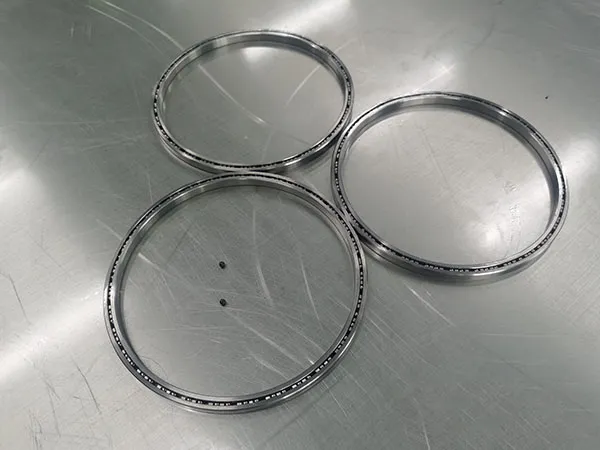
1. Material Selection and Surface Treatments
Selecting the right material is the first and most effective defense against corrosion. Options include:
Stainless Steel Bearings: Superior corrosion resistance compared to carbon steel, ideal for humid or chemically active environments.
Chrome-Plated Surfaces: A hard, corrosion-resistant layer protects bearing rings and rolling elements from wear and moisture.
Ceramic Elements: Hybrid bearings with ceramic balls resist rust and chemical attacks, particularly useful in high-speed or harsh chemical conditions.
Additional surface treatments can further enhance protection:
Passivation improves stainless steel’s natural corrosion resistance.
Phosphate coatings provide a thin protective layer suitable for light industrial use.
Electroless nickel plating offers uniform corrosion protection on complex geometries.
2. Lubrication Strategies for Corrosion Protection
Proper lubrication serves a dual purpose: reducing friction and forming a protective barrier against moisture. Effective strategies include:
Grease Lubrication: Use high-quality, water-resistant grease to prevent rust in humid or wet environments.
Oil Bath Lubrication: Continuous oil supply cools bearings while protecting against corrosion.
Additive Lubricants: Corrosion inhibitors in grease or oil enhance protection in aggressive chemical or saline conditions.
Regular inspection and timely re-lubrication are critical, especially for bearings operating under high load, high speed, or fluctuating temperature conditions.
3. Environmental Control Measures
Minimizing exposure to corrosive factors is a simple yet highly effective method:
…
For more detailed information on corrosion protection methods for thin-section bearings, please click to visit: https://www.lynicebearings.com/a/blog/thin-section-bearing-corrosion-protection-methods.html