
Crossed roller bearings are widely applied in industrial automation, precision machinery, robotics, medical devices, and high-accuracy machine tools. Their ability to sustain radial, axial, and moment loads while maintaining exceptional rigidity makes them indispensable in many engineering systems. However, these advantages only translate into peak performance when the bearings are installed and commissioned correctly.
Crossed Roller Bearing Installation and Commissioning Guide
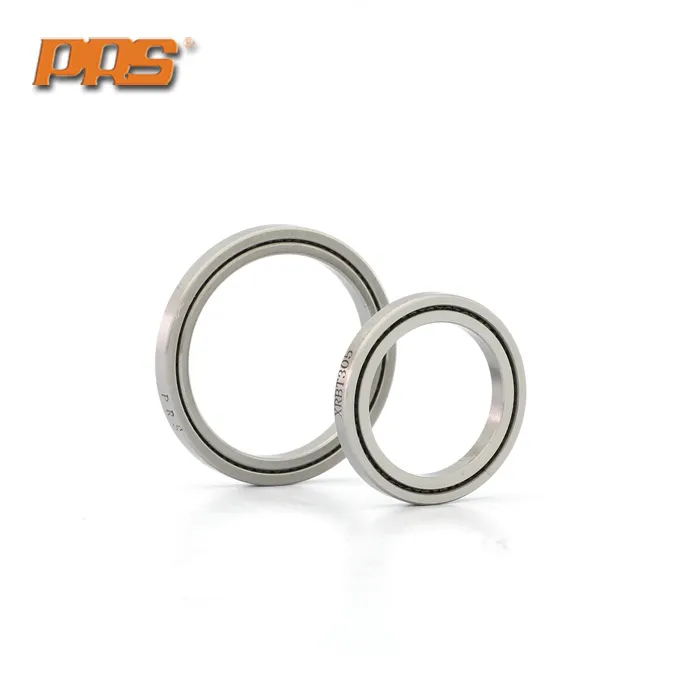
This guide provides a detailed, practical, and engineering-oriented explanation of each installation step, helping technicians avoid common mistakes and achieve long-term operational reliability.
1. Understanding the Structure and Function of Crossed Roller Bearings
Before installation begins, having a clear understanding of the bearing’s internal architecture is essential.
Crossed roller bearings consist of cylindrical rollers arranged alternately at 90° between the inner and outer rings. This unique configuration allows the bearing to handle complex loads from multiple directions while keeping rotational accuracy extremely high.
Key structural considerations include:
Roller orientation and alternating layout
Raceway geometry and clearance
Preload requirements
Lubrication channels or grease reservoirs
Familiarity with these elements helps installers avoid misalignment and insufficient preload—two of the most common causes of early bearing failure.
2. Preparation Before Installation
a. Inspection of Bearings and Mating Components
A meticulous pre-check ensures that no hidden defect compromises future performance.
Surface check: Inspect inner/outer rings and rollers for scratches, dents, oxidation, or deformation.
Dimensional confirmation: Verify the bearing designation, tolerance class, and inner/outer diameter compatibility with the shaft and housing.
Clean working environment: Remove dust, metal filings, cutting oil, or moisture from the installation site. Precision bearings are sensitive to contamination.
b. Required Tools and Materials
To guarantee accuracy and avoid physical damage, ensure the following tools are ready:
Clean, lint-free cloths
Micrometers, dial gauges, and feeler gauges
Soft mallet or hydraulic press
Manufacturer-recommended lubricants
Torque wrench for specific preload adjustments
Protective gloves and assembly fixtures
Adequate preparation significantly reduces risks during assembly and helps the bearing achieve its designed service life.
…
For more detailed information on the comprehensive guide to the installation and commissioning of crossed roller bearings, please click to visit: https://www.prsbearings.com/a/news/cross-roller-bearing-installation-and-commissioning.html