
Glass manufacturing consumes raw materials at scale, but much of what enters the furnace never becomes sellable product. A regional container glass plant approached DISAI with a familiar problem: rising cullet rates, inconsistent batch quality, and heat losses that inflated fuel bills. After a four-month engineering audit and phased retrofitting, the plant reported a 30 percent reduction in total production waste. This case study explains the root causes, the specific DISAI interventions, and how other factories can replicate the results.
The Hidden Cost Structure of a Glass Furnace
For any glass manufacturer, waste does not only appear as broken pieces at the end of the line. It hides in three areas: raw material loss during handling, energy wasted through unstable melting conditions, and downtime caused by refractory or machine faults. The factory in question ran two continuous furnaces producing around 240 tons of container glass per day. Its reject rate hovered near 6 percent, and its cullet return ratio was higher than industry benchmarks. More critically, temperature swings in the melter forced operators to add extra fuel to maintain homogeneity.
An initial data review revealed that 62 percent of the measured waste traced back to batch preparation and melting instability. Only 22 percent came from forming defects. The remaining 16 percent was attributed to packing and logistics damage. This breakdown redirected management’s attention from the forming machine to the upstream process.
DISAI’s Approach: Closed-Loop Control from Batch House to Forehearth
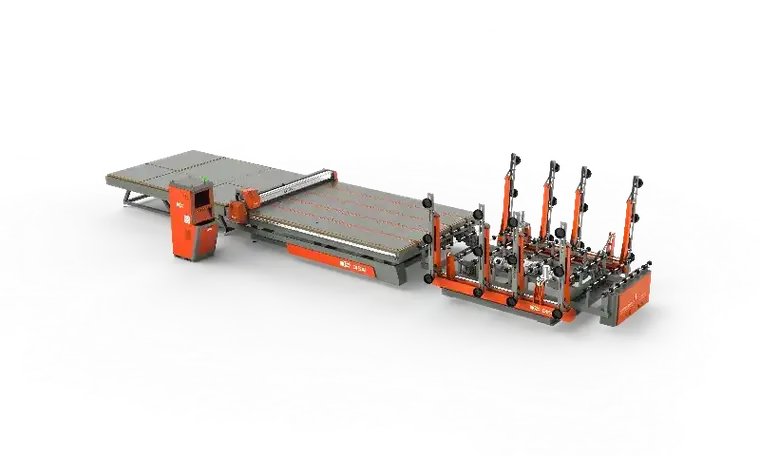
DISAI installed an upgraded batch weighing and mixing system that synchronizes raw material feeding with real-time furnace conditions. The core innovation was not a single machine but a control philosophy: every kilogram of batch is tracked, and every temperature shift triggers an immediate recipe adjustment. This approach reduces the need for corrective additives and cuts the formation of unmolten sand.
Precision Batch Formulation
The previous batching system used gravity-fed hoppers with ±1.5 percent weighing tolerance. DISAI replaced the load cells and closed-loop feedback controls, reducing tolerance to ±0.25 percent. A 1 percent variation in sand particle size distribution, for example, directly impacts melting energy. By tightening batch consistency, the furnace required less over-heating to compensate for composition drift. The factory recorded a 17 percent drop in specific energy consumption per ton of glass.
Thermal Profile Stabilization
DISAI’s thermal imaging sensors and zone-control algorithms adjusted the gas/air ratio every 20 seconds. This prevented cold spots that cause stone and cord defects. Over a six-month period, furnace temperature variance was reduced from ±34°C to ±8°C. As a direct result, the ratio of first-quality containers rose from 88 percent to 93.5 percent.
…
For more details on the case study—how a glass factory reduced waste by 30%—please click here: https://www.disaiglass.com/industry-news/glass-waste-case/