Industrial expansion demands speed, scalability, and cost control—three factors that traditional construction often fails to deliver. Modular steel buildings have emerged as a game-changing alternative, enabling businesses to add capacity in months rather than years while maintaining structural integrity and flexibility. This shift is not merely a trend; it represents a fundamental rethinking of how industrial space is created, and companies like MeiChen Steel are at the forefront of engineering these solutions. Understanding why modular steel buildings are revolutionizing industrial expansion can help decision-makers evaluate whether this approach aligns with their growth strategies.
The Growing Need for Agile Industrial Expansion
Manufacturing, logistics, and energy sectors face relentless pressure to scale quickly. Supply chain disruptions, fluctuating demand, and the rise of e-commerce have made agility a competitive imperative. Traditional site-built construction—with its permitting delays, weather dependencies, and labor shortages—often creates bottlenecks that hamper growth. Modular steel buildings address these pain points by shifting most fabrication off-site into controlled factory environments, where production runs parallel to site preparation. This parallel process can cut overall project timelines by 30% to 50% compared to conventional methods, a critical advantage when market windows are narrow.
What Makes Modular Steel Buildings Different?
Off-Site Fabrication, On-Site Assembly
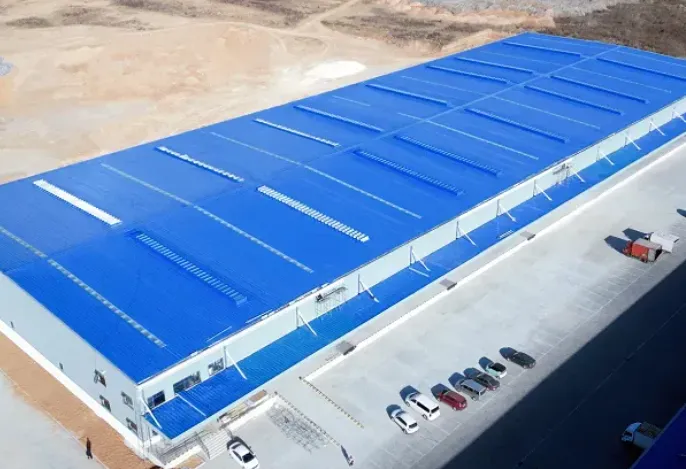
Unlike stick-built structures, modular steel buildings are composed of prefabricated sections—walls, roof panels, and integrated systems—manufactured to precise specifications in a factory. These modules are then transported to the site and assembled rapidly. The process reduces waste, improves quality control, and eliminates many of the variables that slow down traditional builds. MeiChen Steel specializes in designing modules that can be customized to fit specific industrial layouts, from warehouse expansions to multi-story production facilities.
Inherent Flexibility for Future Changes
Industrial requirements rarely stay static. A building that works for today’s production line may need reconfiguration next year. Modular steel systems are inherently adaptable: non-load-bearing walls can be repositioned, modules can be added or removed, and the open-span design allows for large, column-free interiors. This flexibility reduces long-term capital risk and supports continuous process improvement—a key reason why forward-thinking facility managers are embracing modular approaches.
Key Advantages Over Traditional Construction
The revolution in industrial expansion is driven by measurable benefits that go beyond speed. Below is a comparison between modular steel buildings and conventional construction across critical decision factors:
- Schedule: Modular projects typically complete 30–50% faster because site work and module fabrication happen concurrently.
- Cost Certainty: Factory-controlled production minimizes change orders and material waste, providing tighter budget control. Traditional projects often experience 10–20% cost overruns due to unforeseen site conditions or delays.
- Quality: Modules are built under consistent conditions with rigorous inspections, resulting in fewer defects. On-site construction is subject to weather, trades coordination issues, and inconsistent workmanship.
- Safety: Less on-site work means fewer opportunities for accidents. Factory settings have established safety protocols and reduced exposure to heights and heavy equipment.
- Sustainability: steel is infinitely recyclable, and off-site fabrication generates significant waste reduction—up to 70% less scrap compared to traditional methods. Energy efficiency can be optimized during design.
- Scalability: Modules can be sized for standard truck transport, allowing phased expansions that align with budget cycles and demand growth.
Addressing Common Concerns
Some decision-makers worry that modular buildings look utilitarian or limited in design. In reality, modern modular steel structures can incorporate architectural features, insulation systems, and finishes that match or exceed traditional buildings. Additionally, financing and permitting are often streamlined because modular systems comply with recognized building codes (IBC, ASTM, AISC) just as site-built structures do. MeiChen Steel provides engineering documentation and third-party certifications to ensure seamless approval processes.
…
For more details on why modular steel construction is revolutionizing industrial expansion, please click here: https://www.meichensteel.com/a/procurement-guides/modular-steel-guide.html