
Industrial facilities that discharge process wastewater containing oil and grease face strict limits under the U.S. Environmental Protection Agency (EPA). Exceeding those limits can result in fines, permit violations, and environmental harm. Oil water separators are the primary treatment technology used to remove free and dispersed oil, helping plants meet EPA wastewater limits consistently. But not all separators are equal. Design, sizing, maintenance, and monitoring all determine whether a system achieves compliance. Zhengyuan Petrochemical has extensive experience in engineering oil water separators that deliver reliable performance under real-world conditions. This article explains how these systems work, what EPA limits typically apply, and what it takes to keep your discharge within legal boundaries.
Understanding EPA Wastewater Limits for Oil and Grease
The EPA regulates industrial wastewater discharges under the Clean Water Act through the National Pollutant Discharge Elimination System (NPDES) permit program. For oil and grease (O&G), many permits set a daily maximum of 100 mg/L and a monthly average of 50 mg/L. However, these limits are not universal. They vary by industry category, receiving water body, and local pretreatment standards. For example, facilities in petroleum refining, metal finishing, and food processing often face stricter limits or additional requirements for total suspended solids (TSS), chemical oxygen demand (COD), and toxic pollutants.
Compliance is not just about meeting a single number. Permits may specify sampling frequency, analytical methods, and reporting deadlines. A single exceedance can trigger enforcement action. Therefore, oil water separators must be designed with a margin of safety and operated to handle variable influent conditions. Understanding your specific permit limits is the first step. The second is selecting a separator that can reliably achieve those limits.
How Oil Water Separators Remove Oil from Wastewater
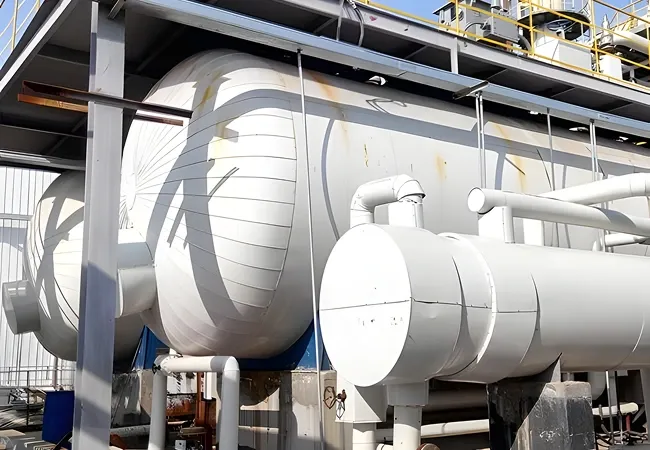
Most oil water separators rely on gravity separation. Oil is less dense than water, so it rises. But rising is not instantaneous. The rate at which an oil droplet rises depends on its size and the difference in density, as described by Stokes’ Law. Larger droplets rise faster. Smaller droplets, especially those below 20 microns, rise very slowly and may not separate in a simple gravity separator.
To overcome this, modern separators incorporate coalescing media. As wastewater flows through a coalescing plate pack or media, small oil droplets collide and merge into larger ones. These larger droplets then rise to the surface, where they are skimmed off. The remaining water exits the system. This process can reduce effluent oil concentrations to well below EPA limits.
…
For more details on how oil-water separators meet U.S. EPA wastewater discharge standards, please click here: https://www.zy-petrochemical.com/a/news/how-oil-water-separators-meet-epa-wastewater-limits.html