
Uneven glass cuts are among the most frustrating problems in glass fabrication. A slight deviation along the score line can lead to chipped edges, rough breakouts, or outright breakage — wasting material and reducing production efficiency. Whether you operate a manual scoring table or an automated CNC glass cutting machine, the culprit is rarely the glass itself. Most uneven cuts stem from a handful of adjustable parameters that you can correct quickly without replacing expensive components. In this guide, we walk you through the most effective adjustments to restore clean, straight, and reproducible cuts.
Why Do Uneven Cuts Occur? The Root Cause Checklist
Before making any adjustments, it is essential to understand what is happening at the interface between the cutting wheel and the glass surface. Uneven cuts typically fall into three categories: inconsistent scoring depth, lateral deviation from the intended line, and irregular breakouts. Each has its own set of root causes.
Scoring Depth Variations
If your score line varies in visibility — sometimes deeper, sometimes shallower — the pressure applied by the cutting wheel is unstable. Pressure fluctuations can come from pneumatic regulators, mechanical springs, or even a slightly worn spindle bearing. A consistent, controlled pressure is the single most important factor in producing a uniform score.
Lateral Deviation (Wandering Cut)
When the cutting wheel veers off a straight path, check the alignment of the guide rails and the wheel carriage. For manual cutters, a warped straightedge or a loose guide bar will cause the wheel to drift. For CNC machines, excessive play in the linear guides or a worn motor coupling can produce the same symptom.
Poor Breakout Quality
Sometimes the score itself looks perfect, but when the glass is snapped, the edge veers off. This often relates to the condition and angle of the cutting wheel, insufficient cutting oil, or inappropriate cutting speed.
Quick Adjustments: Step-by-Step to Straight Cuts
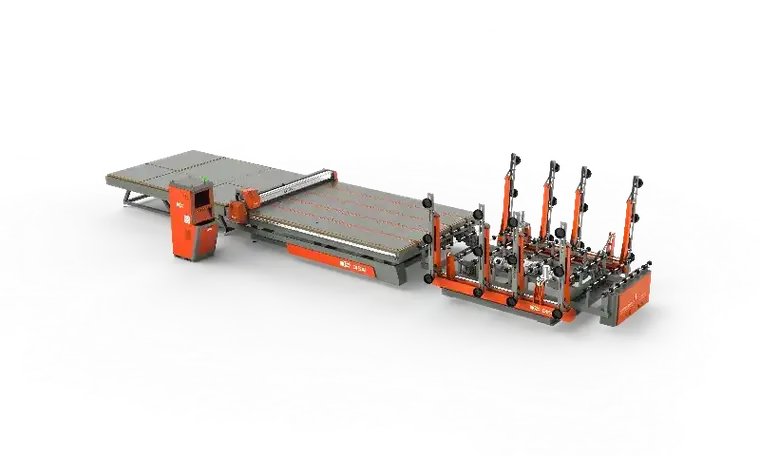
Below are the adjustments you should implement in order of simplicity and impact. Most take less than ten minutes and require only basic hand tools.
1. Adjust Cutting Wheel Pressure
The most common cause of uneven cuts is incorrect score pressure. If the pressure is too low, the score is shallow and the crack may veer. If too high, the glass might chip, or the wheel may generate excessive lateral stress. Start by checking your recommended pressure range — usually measured in Newtons or pounds. For 4mm float glass, for example, a typical range is 10–14 N. Use a calibrated pressure gauge if your machine has one. On manual scorers, tighten or loosen the spring tension knob in small increments and test on scrap glass. The goal is a smooth, faint but continuous score line with no glass dust.
…
For more details on how to fix uneven glass cuts using these quick-adjustment methods, please click here: https://www.disaiglass.com/industry-news/fix-uneven-glass-cuts/