
Selecting a slewing bearing for heavy machinery such as cranes, excavators, or wind turbines is a critical procurement decision. A poorly performing bearing can lead to downtime, safety hazards, and costly replacements. Before finalizing a purchase, you need to verify that the bearing meets your operational demands. This article provides a systematic approach to test slewing bearing performance, covering key indicators, practical methods, and how to partner with a reliable manufacturer like LYMC to ensure long-term reliability.
Why Pre-Purchase Testing Matters
Slewing bearings are designed to handle combined loads—axial, radial, and moment—under slow or oscillating rotation. Unlike standard rolling bearings, they are often custom-made for specific applications. Testing before purchase helps you avoid mismatched specifications, premature failures, and unexpected costs. A thorough pre-purchase evaluation should include dimensional checks, material verification, and functional simulation.
Key Performance Indicators to Test
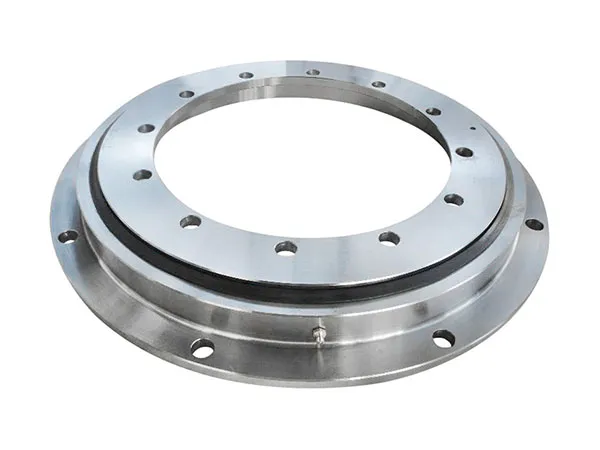
1. Rotational Accuracy and Running Torque
Measure the starting torque and running torque under no-load and light-load conditions. Excessive torque indicates poor raceway finishing or improper internal clearance. Use a torque wrench or a dedicated test rig. For most applications, the running torque should be smooth and consistent without sudden spikes. LYMC performs torque measurement on every bearing to ensure compliance with ISO specifications.
2. Axial and Radial Runout
Runout directly affects the alignment of your equipment. Mount the bearing on a test fixture and rotate it slowly while measuring axial and radial displacement with dial indicators. Permissible runout depends on the application; for precision turntables, it may be less than 0.1 mm, while for excavators, up to 0.5 mm can be acceptable. Always compare measured values against the manufacturer’s declared tolerance.
3. Hardness and Case Depth
The raceway surface hardness typically ranges from HRC 55–62 for induction-hardened slewing bearings. Use a portable hardness tester on a small area (with manufacturer’s consent) or request a test coupon from the same production batch. The case-hardened depth should be at least 2–3 mm for heavy-load applications. Inadequate hardness leads to rapid wear and plastic deformation.
…
Click here for more detailed information on how to test the performance of a slewing bearing before purchase: https://www.mcslewingbearings.com/a/news/test-slewing-bearing.html