
Small workshops often face a dilemma: they need the precision and output of industrial rolling mills, but lack the space, budget, or power supply to install full-scale equipment. Portable rolling mills have emerged as a potential solution, promising flexibility without sacrificing quality. But can a compact machine truly deliver industrial results? The answer depends on understanding the technology, the materials processed, and realistic performance benchmarks. This article breaks down the capabilities, limitations, and real-world applications of portable rolling mills, helping workshop owners make an informed decision.
Understanding the Capabilities of Portable Rolling Mills
Portable rolling mills are designed for mobility and space efficiency. They typically feature a smaller footprint, reduced weight, and lower power requirements compared to stationary industrial mills. However, they are not simply scaled-down versions. Engineering compromises exist in motor power, roll rigidity, and control systems.
Key Features and Specifications
Most portable mills used in small workshops handle materials such as sheet metal, wire, or small structural sections. Common specifications include:
- Roll diameter and length: Typically 100–300 mm, limiting maximum strip width to around 200–250 mm.
- Motor power: 1.5–5 kW, sufficient for low-volume reduction of soft metals like aluminum, copper, and mild steel.
- Variable speed control: Allows adaptation to different material thicknesses and required surface finish.
- Manual or hydraulic adjustment: Affects precision and repeatability.
These specs make portable mills ideal for prototyping, custom fabrication, and low-batch production. For high-volume continuous processing, they fall short—but that is not their intended use.
Comparing Portable vs. Industrial Rolling Mills
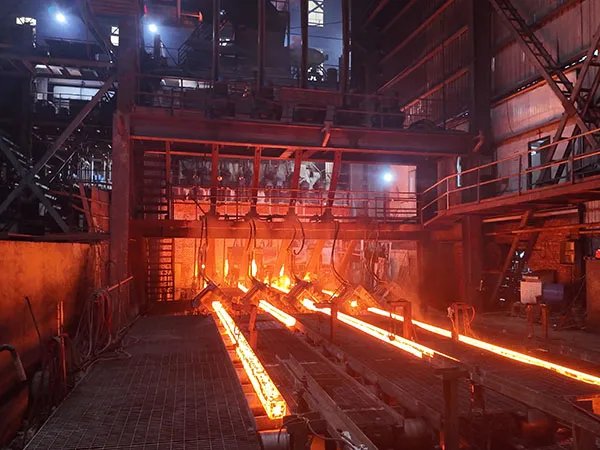
Industrial mills are built for maximum throughput and tight tolerances over thousands of meters. Portable mills target flexibility and lower cost. Here is a direct comparison of key performance factors:
- Thickness tolerance: Industrial mills achieve ±0.01 mm or better via hydraulic screw-downs and automatic gauge control. Portable mills typically achieve ±0.05–0.1 mm, acceptable for many workshop applications.
- Surface finish: Industrial mills use polished rolls and coolant systems for mirror-like surfaces. Portable mills produce a matte to semi-bright finish depending on roll condition and lubrication.
- Throughput: Industrial lines run at 50–200 m/min. Portable mills operate at 1–5 m/min due to smaller motors and manual feed.
- Capital cost: Industrial mills start at $100,000+; portable mills range from $5,000 to $30,000.
- Energy consumption: Portable mills use single-phase or low three-phase power, often <10 kW.
- Maintenance: Portable mills have simpler mechanics, easier to repair in-house.
Click here for more details on portable rolling mills for small workshops—can they deliver industrial-grade results: https://www.gyssljx.com/a/news/portable-rolling-mill.html