
In high-temperature environmental testing, the temperature ramp rate—the speed at which a chamber heats or cools—often receives less attention than maximum temperature or chamber volume. Yet this parameter directly influences test reproducibility, product failure detection, and overall operational efficiency. A poorly controlled ramp rate can introduce thermal gradients, stress non-uniformity, and invalidate test results. Understanding why ramp rate matters is essential for selecting the right chamber and designing reliable accelerated life tests. This article explores the technical significance of ramp rate, the factors that determine it, and how HEATEST Instrument engineers chambers to deliver precise, repeatable thermal profiles.
What Is Temperature Ramp Rate?
Temperature ramp rate defines the speed of temperature change inside the test chamber, typically expressed in degrees Celsius per minute (°C/min). It can refer to the rate of heating (ramp-up) or cooling (ramp-down). While many specifications list a maximum ramp rate, the actual achievable rate depends on the chamber’s design, power capacity, and the thermal load presented by the test specimen.
Ramp-Up vs. Ramp-Down
Heating ramp rates are generally faster than cooling ramp rates because resistive heating elements can quickly add energy, while cooling requires refrigerant systems or liquid nitrogen to extract heat. In high-temp test chambers, ramp-down from extreme temperatures (e.g., 300°C to room temperature) demands robust cooling subsystems. HEATEST Instrument optimizes both directions using advanced PID control and multi-stage refrigeration.
Why Temperature Ramp Rate Matters in High Temp Test Chambers
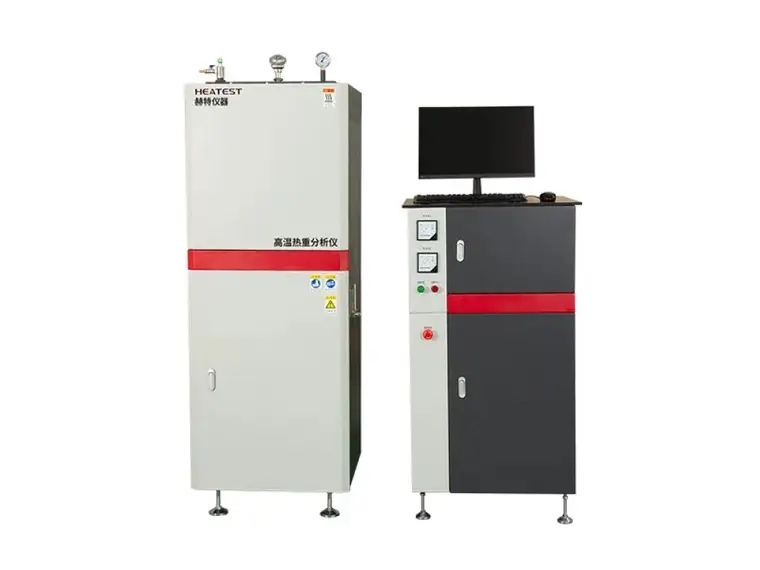
The ramp rate is not just a performance metric; it is a critical factor that affects test validity, product reliability, and cost of testing. Below are the key reasons why careful control of ramp rate is essential.
1. Impact on Thermal Gradient and Test Uniformity
When a chamber changes temperature too quickly, the air temperature near the heating elements or cooling coils may overshoot, creating spatial temperature gradients. Meanwhile, the test specimen, often with high thermal mass, lags behind the air temperature. This mismatch causes surface-to-core temperature differences that can induce unrealistic thermal stresses. A controlled ramp rate ensures the specimen’s internal temperature follows the setpoint closely, maintaining uniform conditions throughout the workspace. HEATEST Instrument’s chambers incorporate high-efficiency air circulation and balanced heating/cooling zones to minimize gradients even during fast ramps.
…
Click here for more details on high-temperature testing equipment used for the reliability testing of electronic products: https://www.lyheatest.com/tester-knowledge/temp-ramp-rate-matters/