Industrial facilities increasingly require flexible firing solutions that can adapt to fluctuating fuel availability, pricing, and regulatory demands. Dual fuel industrial burners offer this capability, enabling seamless switching between natural gas and fuel oil within seconds—without interrupting production. For operations seeking energy reliability and operational continuity, these burners represent a strategic investment. SHUXIN, as a specialist in combustion technology, has engineered burners that combine rapid changeover with high thermal efficiency and low emissions. Understanding how these systems function and the advantages they provide is essential for procurement and engineering teams evaluating new burner installations or upgrades.
How Dual Fuel Burners Achieve Instant Fuel Switching
The core mechanism behind the rapid changeover lies in sophisticated valve automation and advanced control logic. A dual fuel burner from SHUXIN integrates multiple fuel metering valves, a single combustion chamber, and a programmable logic controller (PLC) that manages the transition sequence.
Fuel Circuit Design and Control Architecture
Each fuel type has its own dedicated supply line with independent safety shut-off valves, pressure regulators, and flow control valves. During operation, the burner typically runs on either gas or oil as the primary fuel. When the control system receives a switching command—either manually from an operator or automatically triggered by a fuel price signal or supply interruption—it initiates a pre-programmed sequence:
- The active fuel valve begins closing while the electronic controller adjusts the combustion airflow to maintain the required air-to-fuel ratio.
- Simultaneously, the inactive fuel valve opens incrementally, and the ignition system (often a dual-fuel igniter or pilot burner) ensures continuous flame presence.
- Within 2–5 seconds, the transition is complete, and the burner stabilizes at the new fuel throughput with minimal temperature or pressure fluctuation.
This design eliminates the need for burner shutdown, purging cycles, or manual reconfiguration—critical for processes such as power generation, cement kilns, and industrial steam boilers where downtime is costly.
Key Advantages Over Single-Fuel Burners
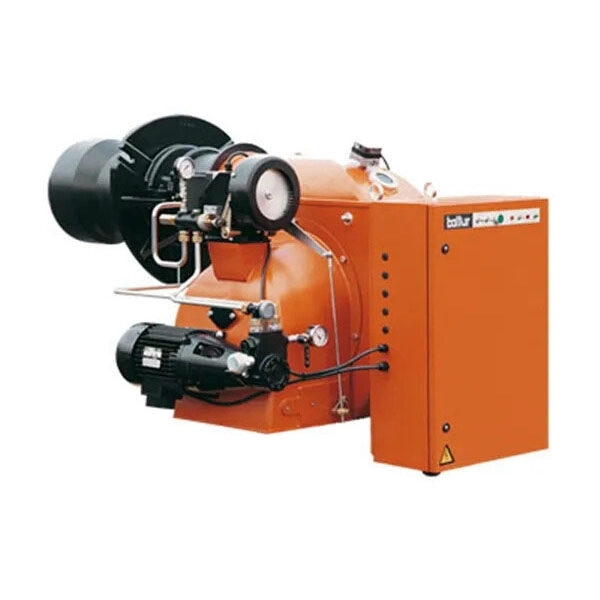
Comparing dual fuel industrial burners with single-fuel counterparts reveals clear operational and financial benefits. Below is a summary of the primary differences:
- Operational Continuity: Single-fuel burners halt production when the fuel supply is interrupted. Dual fuel models switch in seconds, keeping production running.
…
More information about dual-fuel industrial burners: switching between gas and oil in seconds can be found by clicking here:https://www.sxburner.com/a/news/dual-fuel-burners-gu.html